


Watching your dog carry extra weight is more common than most owners realize — and more serious than it looks. Canine obesity has been linked to joint strain, diabetes, heart issues, and a shorter lifespan overall. But cutting treats out entirely often isn’t realistic, especially if you’re using them for training or bonding. The real solution isn’t eliminating treats altogether — it’s choosing the right ones.
This guide walks through how to make healthy, low-calorie dog treats that actually keep your dog feeling satisfied, not just snacking on empty calories. With the right ingredients, your dog can lose weight without feeling like they’re missing out.
Why Regular Treats Work Against Weight Loss
Most commercial dog treats are calorie-dense and nutritionally thin. They’re designed to taste good, not to support a weight-management goal. A few handfuls a day can quietly add up to hundreds of extra calories — often without the owner realizing it, since treats aren’t always factored into a dog’s daily caloric intake the way meals are.
The fix isn’t zero treats. It’s smarter treats: ones built around fiber, lean protein, and low-fat ingredients that fill your dog up without piling on calories. If your dog is already working through a broader weight-conscious routine, pairing these treats with ideas from our low-calorie dog treats guide for overweight dogs can help keep the whole approach consistent.
What Makes a Treat “Weight-Loss Friendly”?
Not all low-calorie treats are created equal. The best ones share a few key traits:
High fiber content. Fiber slows digestion and helps your dog feel fuller for longer, which reduces begging behavior between meals. Ingredients like pumpkin, oats, and green beans are excellent choices here.
Lean protein. Protein supports muscle maintenance during weight loss, which matters since dogs can lose muscle mass along with fat if their diet isn’t balanced.
Low fat, no added sugar. Fat is the most calorie-dense nutrient, so trimming it is one of the most effective ways to cut calories without reducing treat size drastically.
Water content. Ingredients like cucumber, zucchini, or pumpkin add volume and crunch without adding many calories, making treats feel more substantial.
For dogs with digestion sensitivities alongside weight concerns, it’s worth exploring our fiber-rich dog treats for digestion, since fiber plays a double role in both satiety and gut health.
Ingredients
This recipe uses simple, low-calorie, high-fiber ingredients that are easy to find and gentle on your dog’s system.
- 1 cup canned pumpkin (plain, not pie filling)
- 1 cup oat flour (or rolled oats blended fine)
- 1/2 cup finely grated carrot
- 1/4 cup green beans, finely chopped or pureed
- 1 egg (for binding)
- 1 tablespoon unsweetened applesauce
Optional additions:
- A pinch of parsley (adds freshness and mild breath-freshening benefits)
- 1 teaspoon ground flaxseed (adds fiber and healthy fats in moderation)

Step-by-Step Instructions
Step 1: Preheat the Oven
Preheat your oven to 325°F (163°C) and line a baking sheet with parchment paper.
Step 2: Mix the Wet Ingredients
In a large bowl, whisk together the pumpkin, egg, and applesauce until smooth and well combined.
Step 3: Add the Vegetables
Stir in the grated carrot and chopped green beans. These add volume and fiber while keeping the overall calorie count low.
Step 4: Fold in the Oat Flour
Gradually add the oat flour, mixing until a thick, workable dough forms. If the dough feels too sticky, add a little more oat flour; if too dry, add a small splash of water.
Step 5: Shape the Treats
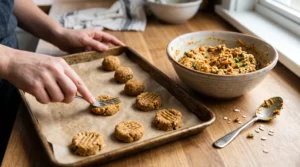
Roll the dough into small, bite-sized balls and flatten slightly with your palm or a fork. Keeping treats small is especially important for weight management, since portion size directly affects calorie intake.
Step 6: Bake
Place the treats on the prepared baking sheet and bake for 20–25 minutes, or until firm and lightly golden at the edges.
Step 7: Cool Before Serving
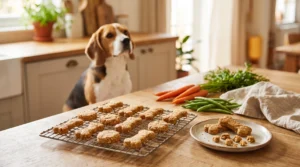
Let the treats cool completely on a wire rack. They’ll firm up further as they cool, giving them a satisfying texture that encourages slower chewing.
Portion Guidelines for Weight Loss
Even healthy treats need portion control. A few general guidelines:
- Treats should make up no more than 10% of your dog’s total daily calories, and even less if your dog is actively losing weight.
- Break treats into smaller pieces for training sessions rather than giving a whole piece each time.
- Track treat intake alongside meals, especially if multiple family members are feeding the dog throughout the day.
If your dog’s weight issue is tied to an underlying condition like diabetes, it’s worth reading our guide on sugar-free diabetic dog treats to understand how ingredient choices shift when blood sugar is also a concern.
Additional Tips for Supporting Healthy Weight Loss
- Swap, don’t just cut. Replacing calorie-dense treats with high-fiber, low-fat ones is more sustainable long-term than simply reducing treat frequency.
- Use treats as training tools. Smaller, more frequent low-calorie treats during training sessions can reinforce behavior without excess calories.
- Pair with exercise. Treats alone won’t drive weight loss — consistent daily activity matters just as much.
- Check in with your vet. Significant or rapid weight gain can sometimes signal an underlying health issue, so it’s worth ruling that out before starting a weight-loss plan.
Frequently Asked Questions
Can I use sweet potato instead of pumpkin?
Yes, though sweet potato is slightly higher in natural sugar and calories, so pumpkin remains the better choice for strict weight-loss treats.
How many of these treats can I give my dog per day?
This depends on your dog’s size and daily calorie needs, but generally 2–4 small treats per day fits within a healthy treat allowance for most medium-sized dogs.
Is oat flour necessary, or can I use regular flour?
Oat flour is preferred since it’s higher in fiber and more digestible, both of which support weight management better than refined flour.
My dog seems hungrier than usual while losing weight — is that normal?
Mild increased hunger can be normal during a calorie deficit, but persistent excessive hunger should be discussed with your vet to rule out other causes.
Final Thoughts
Helping your dog reach a healthier weight doesn’t mean treat time has to disappear — it just means choosing treats that work with the goal instead of against it. This pumpkin, carrot, and green bean recipe delivers fiber and flavor without unnecessary calories, keeping your dog satisfied while supporting their weight-loss journey. For more ideas on building out a full healthy treat rotation, take a look at our vegetables for healthy homemade dog treats guide.