


When most people think of dog treats, they picture peanut butter biscuits or meaty jerky strips. But some of the healthiest, most nutrient-packed treats you can give your dog aren’t made from meat or grains at all — they’re made from vegetables. Low in calories, rich in fiber, and loaded with vitamins, vegetables make an excellent base for homemade dog treats, especially if you’re watching your dog’s weight or looking for a more natural snack option.
In this guide, we’ll walk through the best vegetables for dog treats, why they’re beneficial, and how to turn them into tasty, vet-friendly snacks your dog will actually enjoy.
Why Vegetables Make Great Dog Treats
Dogs are primarily carnivores, but that doesn’t mean vegetables don’t have a place in their diet. In fact, many vegetables offer nutritional benefits that complement a dog’s regular food perfectly.
They’re naturally low in calories. Unlike many commercial treats, vegetables won’t contribute to unwanted weight gain, making them ideal for dogs who need to watch their calorie intake.
They’re rich in fiber. Fiber supports healthy digestion and can help dogs feel fuller, which is especially useful for overweight dogs or those prone to begging.
They’re packed with vitamins and antioxidants. Many vegetables support immune health, skin and coat condition, and overall wellness.
They’re a safer alternative for dogs with allergies. Vegetables are far less likely to trigger food sensitivities compared to common allergens like dairy, wheat, or certain proteins.
If your dog is currently on a weight-management plan, pairing vegetable-based treats with portion control can make a real difference. Our guide to low-calorie treats for overweight dogs goes deeper into building a treat routine that supports healthy weight loss.

The Best Vegetables for Homemade Dog Treats
Not all vegetables are safe for dogs, so it’s important to stick to options that are both nutritious and non-toxic. Here are some of the best choices.
1. Carrots
Carrots are a classic choice for a reason. They’re crunchy, naturally sweet, and loaded with beta-carotene, which supports eye health and immune function. Dogs love the texture, and carrots are gentle enough for most sensitive stomachs. Frozen carrot slices also make a satisfying, cooling treat in warmer months. For a full recipe using this ingredient, check out our carrot dog treat recipe.
2. Sweet Potatoes
Sweet potatoes are another fantastic option, offering a good dose of fiber, vitamin A, and potassium. They can be baked into chewy slices, dehydrated into jerky-like strips, or mashed and mixed into biscuit dough. Their natural sweetness makes them a hit with picky eaters. If you want a step-by-step recipe, our sweet potato dog treats post covers everything from prep to baking time.
3. Pumpkin
Pumpkin is a staple in many dog treat recipes, and for good reason. It’s gentle on digestion, high in fiber, and often recommended by veterinarians to help with occasional stomach upset. Pumpkin also blends well with other ingredients, making it easy to incorporate into both baked and no-bake treats. Our full pumpkin dog treats recipe is a great place to start if this is a new ingredient for you.
4. Green Beans
Green beans are low-calorie, high in fiber, and safe for dogs to eat raw, steamed, or frozen. Many vets even recommend swapping a portion of a dog’s regular food with steamed green beans as part of a weight-management strategy. They can be chopped and mixed into treat dough or served on their own as a quick snack.
5. Zucchini
Zucchini is mild, hydrating, and gentle on digestion. It’s a good option for dogs who need extra hydration or a lower-calorie treat option. Shredded zucchini blends easily into treat batter without overpowering other flavors.
6. Pumpkin and Carrot Combos
Combining vegetables can boost both the nutritional value and flavor of your treats. Pumpkin and carrot, for example, pair well together in baked biscuits, offering fiber, beta-carotene, and natural sweetness in one treat.
7. Peas
Peas are small, easy to portion, and packed with vitamins A, K, and B. They work well as a mix-in for baked treats or as a frozen snack during hot weather.
How to Turn Vegetables into Dog Treats
Once you’ve chosen your vegetables, there are several simple methods to transform them into treats:
Baking: Combine pureed or shredded vegetables with a binding ingredient like oat flour or egg, shape into biscuits, and bake until firm.
Dehydrating: Thin vegetable slices, like sweet potato or carrot, can be dehydrated into natural, chewy jerky-style treats with no added ingredients at all.
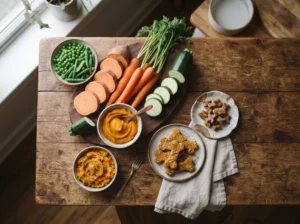
Freezing: Vegetables like carrots or green beans can be frozen whole or pureed into ice cube trays for a refreshing summer treat.
Steaming and Serving Fresh: Some vegetables don’t need any preparation beyond steaming, making them a quick, no-fuss treat option.
Vegetables to Avoid
While many vegetables are safe, a few should never be given to dogs:
- Onions and garlic – Toxic to dogs and can damage red blood cells.
- Mushrooms – Some varieties are toxic; it’s safest to avoid them altogether.
- Raw potatoes – Contain solanine, which can be harmful in large amounts.
Always research a vegetable before introducing it, and consult your veterinarian if you’re unsure.

Tips for Introducing Vegetable Treats
- Start small. Introduce new vegetables gradually to avoid digestive upset.
- Watch for allergies. While rare, some dogs can be sensitive to certain vegetables. Monitor for any unusual symptoms after introducing a new ingredient.
- Keep portions appropriate. Even healthy treats should make up no more than 10% of your dog’s daily caloric intake.
- Combine with other healthy recipes. Once you’re comfortable with vegetable-based treats, you can experiment further. Our homemade dog biscuits with 3 simple ingredients recipe is a great next step if you want to combine vegetables with pantry staples like oats and peanut butter.
Frequently Asked Questions
Can dogs eat raw vegetables?
Many vegetables, like carrots and green beans, are safe raw. Others, like sweet potatoes, should be cooked to make them easier to digest.
Are vegetable treats good for puppies?
Yes, in moderation. Introduce one vegetable at a time and watch for any digestive reactions.
Can I mix multiple vegetables in one treat recipe?
Absolutely. Combining vegetables like pumpkin and carrot can boost both flavor and nutritional value.
Final Thoughts
Vegetables are an often-overlooked but incredibly valuable ingredient for homemade dog treats. They’re nutrient-dense, low in calories, and easy to incorporate into both baked and no-bake recipes. Whether you’re managing your dog’s weight or simply want a healthier snack option, vegetable-based treats are a simple way to support your dog’s overall wellness, one wholesome bite at a time.