

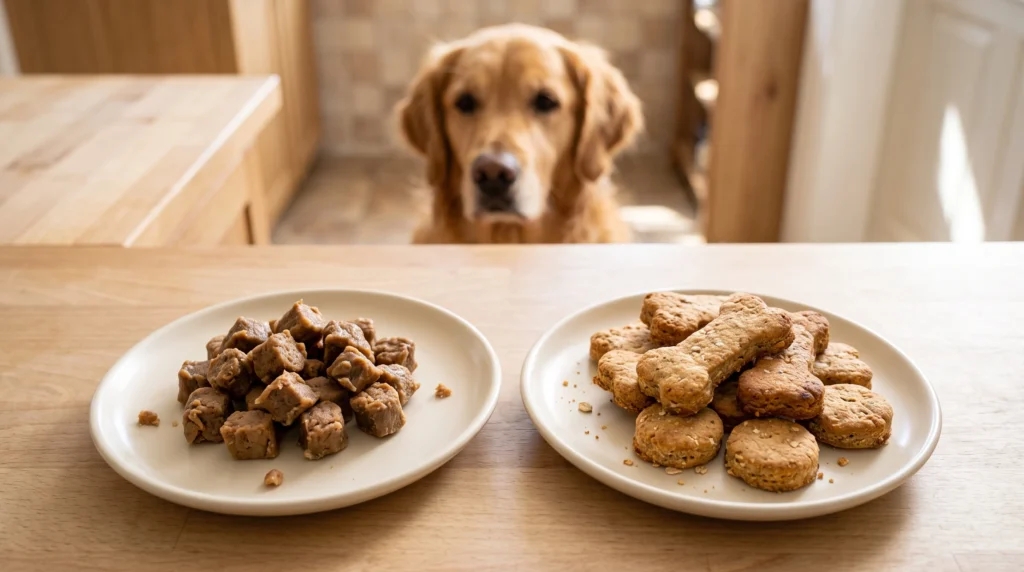
Walk down any pet store aisle and you’ll see two main kinds of treats: soft, chewy ones and hard, crunchy ones. They look different, but the choice matters for more than texture. The right treat depends on your dog’s age, teeth, and health, and on what you’re using it for. This guide explains how soft and hard treats differ, where each one works best, and how to choose for your dog.
What Are Soft Dog Treats?
Soft treats are moist and pliable. They usually have a higher moisture content, which makes them easy to chew and often very aromatic. Dogs tend to find them irresistible because the smell is strong and the flavor is rich.
Common features of soft treats:
- Easy to tear into tiny pieces
- Strong smell that grabs a dog’s attention
- Shorter shelf life because of the moisture
- Often made with meat, fruit, or vegetables
What Are Hard Dog Treats?
Hard treats are dry, firm, and crunchy. Biscuits, baked bones, and crisp cookies all fall into this group. Lower moisture means they keep longer and are easy to store, carry, and share.
Common features of hard treats:
- Long shelf life when stored in a dry, airtight container
- Satisfying crunch that many dogs enjoy
- Take longer to eat, which keeps a dog busy
- Less messy in pockets and bags
Soft vs. Hard Treats at a Glance
| Feature | Soft Treats | Hard Treats |
|---|---|---|
| Texture | Moist, chewy | Dry, crunchy |
| Best for | Training, puppies, seniors | Everyday snacks, chewing time |
| Shelf life | Shorter | Longer |
| Ease of chewing | Very easy | Needs good teeth |
| Smell | Strong | Mild |
| Mess | Can be sticky | Can leave crumbs |
When to Use Soft Treats

Training Sessions
Training works best when rewards are quick. Soft treats can be broken into pea-sized pieces, and your dog swallows them in a second without losing focus. The strong smell also helps in distracting places like parks and busy streets.
Puppies
Puppies have small mouths and new teeth that are still settling in. Soft treats are gentler on them and easier to digest in small portions. Check ingredients and portion sizes carefully, and ask your vet about anything new. For recipes designed for young and older dogs, see these soft and chewy dog treats for puppies and seniors.
Senior Dogs and Dogs with Dental Problems
Older dogs often have worn teeth, sore gums, or missing teeth. A hard biscuit can be uncomfortable or even risky for them. Soft treats let them enjoy a reward without pain. If your dog has been avoiding hard food or chewing on one side, mention it to your vet, since dental disease is common and often goes unnoticed.
Medication Time
Soft treats work well for hiding pills. You can press a tablet into the center and seal it. Check with your vet first, since a few medications should be given on an empty stomach.
When to Use Hard Treats

Everyday Snacks
Hard biscuits suit daily rewards. They are easy to portion, they don’t dry out, and they stay fresh longer, so one batch lasts. If you like baking, these homemade crunchy dog biscuits are simple to make in bulk.
Keeping Your Dog Occupied
A tough biscuit takes time to finish. That makes hard treats useful when you need a quiet few minutes, like during a phone call or after a walk.
Helping with Plaque
Crunchy treats can help reduce some soft plaque by scraping the tooth surface, but they are not a replacement for brushing. Veterinary dental experts recommend daily tooth brushing as the most effective home care. If dental health is a priority, look into dental chews that help clean teeth, and choose products designed for that purpose.
Travel and Storage
Hard treats won’t melt, crumble into mush, or spoil quickly in a bag. They are the better choice for road trips, hikes, and days out.
Which Treat Is Healthier?
Neither type is automatically healthier. What matters is the ingredient list, the calorie count, and the portion size.
When comparing treats, look for:
- Short, recognizable ingredients with a named protein or whole food listed first
- Limited added sugar, salt, and artificial colors
- Calorie content per treat, since small treats can still add up
- No xylitol, which is toxic to dogs and sometimes appears in products made for people
A good rule is to keep treats under about 10% of your dog’s daily calories. Soft treats are often higher in calories per piece, while hard treats can be dense and filling. Adjust your dog’s meals if treats are adding up.
Safety Tips for Both Types
- Match size to your dog. Give tiny pieces to small dogs and avoid anything they could swallow whole.
- Supervise chewing. Very hard items can crack teeth, especially in strong chewers. If you can’t press a fingernail into it, it may be too hard.
- Watch for choking. Soft, sticky treats can clump in the throat of a dog that gulps food.
- Introduce new treats slowly. Offer a small amount and watch for stomach upset or itching.
- Store properly. Keep soft treats in the fridge or freezer if they are homemade and moist, and keep hard treats in a dry, airtight container.
How to Choose for Your Dog
Think about three things before you pick:
- Age: Puppies and seniors usually do better with soft treats. Adult dogs with healthy teeth can handle both.
- Purpose: Choose soft for training, hard for chewing time and everyday rewards.
- Health: Dogs with dental disease, allergies, or weight problems may need a specific type. Your vet can guide you.
Many owners keep both on hand. Soft treats go in the training pouch, and hard biscuits stay in the jar at home.

Frequently Asked Questions
Are soft treats bad for teeth?
Not on their own, but they don’t offer any scraping action. Regular brushing matters more for dental health than the treat type.
Can I make soft treats at home?
Yes. Mashed fruit, pumpkin, and oat flour make easy soft treats. Store them in the fridge and use them within a week, or freeze portions.
Do hard treats clean a dog’s teeth?
They may help slightly with plaque, but they don’t replace brushing or professional dental care.
Which treat is best for a picky eater?
Soft treats usually win because of their stronger smell and taste.
How many treats can my dog have each day?
Keep treats under roughly 10% of daily calories, and count training rewards too.
Final Thoughts
Soft and hard treats each have a role. Soft treats are ideal for training, puppies, seniors, and sensitive mouths. Hard treats are better for everyday snacking, storage, and keeping your dog busy. Choose based on your dog’s age, teeth, and needs, keep portions small, and talk to your vet when in doubt. With the right mix, treat time can be both enjoyable and healthy.