

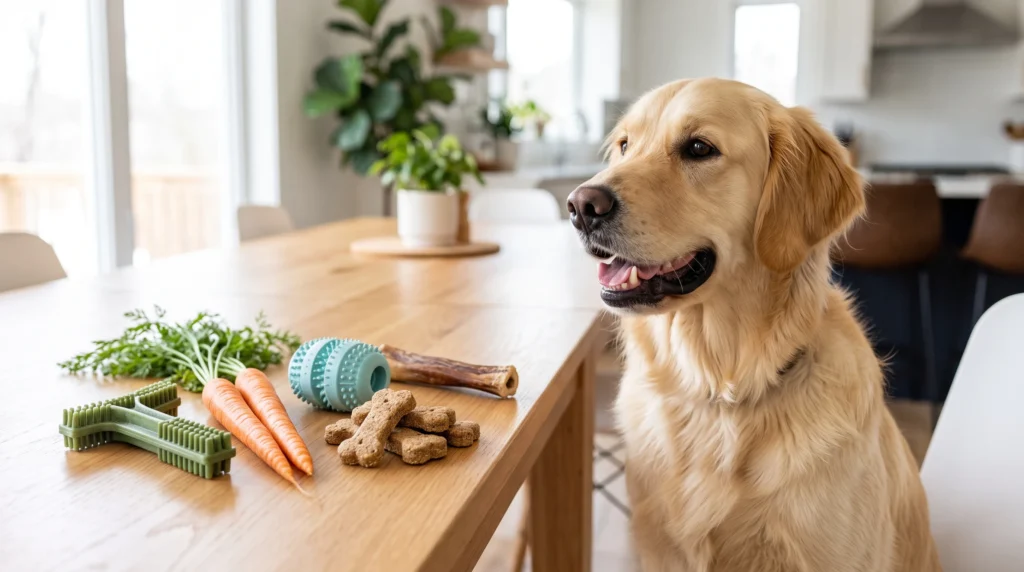
Dog breath that could knock you over is more than an annoyance. It is often the first sign of plaque and tartar building up on your dog’s teeth. Veterinarians say most dogs show some signs of dental disease by age three, and untreated buildup can lead to painful gums, tooth loss, and infections that affect the rest of the body.
Brushing is the gold standard for dental care, but many dogs refuse it. The right chew can fill the gap by scraping plaque as your dog gnaws and by keeping the jaw busy. Below are five types of dental chews that help, plus how to choose safe ones and what to avoid.
How Dental Chews Work
Dental chews clean teeth in two ways. The mechanical action of chewing scrapes soft plaque off the tooth surface before it hardens into tartar. Some chews also contain ingredients that reduce plaque or tartar formation. A chew isn’t a replacement for a professional cleaning when your vet recommends one, but it can slow buildup between visits.
What to Look for Before You Buy
- The VOHC seal. The Veterinary Oral Health Council tests products and awards its seal to those that reduce plaque or tartar. It is the most reliable shortcut when shopping.
- The right size. A chew that’s too small can be swallowed whole and become a choking hazard.
- A short ingredient list with no artificial colors or unnecessary fillers.
- Calorie content. Chews count toward your dog’s daily treats, which should stay under 10% of total calories.
1. VOHC-Accepted Daily Dental Chews
The most dependable choice is a daily dental chew that carries the VOHC seal. These are designed with a firm but flexible texture that lets teeth sink in slightly, so the chew wipes along the tooth surface and near the gumline. Many also include ingredients that help limit tartar.
Best for: Dogs that need consistent, proven support.
Tip: Match the chew to your dog’s weight. Size ranges exist for a reason.
2. Crunchy Raw Vegetables, Especially Carrots
Crisp carrots are a cheap, low-calorie way to give your dog something to crunch. The firm texture offers gentle scraping action, and most dogs love them. Offer a whole carrot to a large dog, or bite-sized pieces to a small one, and supervise so no large chunks are swallowed.
If you’d like to bake the same idea into a treat, try this carrot dog treat recipe.
Best for: Dogs watching their weight, and owners who want a budget option.
Tip: Vegetables freshen breath a little but clean less thoroughly than a VOHC-approved chew. Think of them as a supplement.
3. Textured Rubber Chew Toys
Durable rubber toys with ridges, nubs, or grooves are a good long-term option. As your dog chews, the raised surfaces rub against the teeth. You can even smear a little dog-safe peanut butter into the grooves to keep your dog chewing longer.
Best for: Heavy chewers and dogs that get bored quickly.
Tip: Choose a toy with a little give. If you can’t press a thumbnail into it, it may be hard enough to damage teeth. Replace any toy that cracks or breaks off in pieces.
4. Digestible Natural Chews
Digestible natural chews, such as bully sticks or similar single-ingredient chews, hold a dog’s attention and encourage long, slow chewing. Longer chew time means more contact with the teeth.
Best for: Dogs that love a long-lasting chew.
Tip: These can be high in calories, and some are tough for sensitive stomachs. Offer them in moderation, always supervise, and take the chew away when it gets small enough to swallow. Skip very hard items such as real bones and antlers, which are a leading cause of fractured teeth.
5. Crunchy Baked Biscuits
A hard, crunchy biscuit won’t match a VOHC-tested chew, but it offers a light scraping effect and is far better for your dog than soft, sticky treats that cling to teeth. Baking at home also lets you control the ingredients and avoid sugar and additives.
For a simple starting point, try these homemade crunchy dog biscuits.
Best for: Owners who like to bake and want a simple, wholesome option.
Tip: Bake until fully firm and let the biscuits cool completely so they crisp up.
What About Puppies?
Puppies lose their baby teeth and grow adult teeth over several months, so their gums can be tender. Choose softer, puppy-appropriate chews and avoid anything very hard. Our guide to safe and nutritious puppy treats covers what’s suitable for young dogs.
Chews to Avoid
Not every product marketed for dental health is a good idea. Be cautious with:
- Real bones and antlers. They can crack teeth and splinter.
- Hard nylon or plastic items that you can’t indent with a fingernail.
- Cooked bones, which splinter easily.
- Chews that are too small, which can cause choking or blockages.
A good rule is the knee test: if a chew is hard enough that you wouldn’t want it hitting your own kneecap, it’s probably too hard for your dog’s teeth.

Signs Your Dog Needs a Vet Dental Check
Chews help prevent buildup, but they can’t fix existing disease. Book a vet visit if you notice:
- Persistent, strong bad breath
- Red, swollen, or bleeding gums
- Yellow or brown tartar on the teeth
- Drooling, pawing at the mouth, or dropping food
- Reluctance to chew or play with toys
Your vet can recommend a professional cleaning and tell you which chews suit your dog’s age, size, and health.
A Simple Daily Dental Routine
- Brush with dog-safe toothpaste a few times a week if your dog allows it.
- Offer one dental chew daily, sized correctly.
- Rotate textures with crunchy vegetables and rubber toys to keep things interesting.
- Schedule yearly dental checkups.
- Never use human toothpaste. Many contain ingredients such as xylitol that are toxic to dogs.

Frequently Asked Questions
How often should I give my dog a dental chew?
Most daily dental chews are designed for once a day. Follow the label for your dog’s size.
Do dental chews replace brushing?
No. They help, but brushing remains the most effective at-home method. Using both gives the best results.
Are dental chews safe for small dogs?
Yes, if you choose the right size and supervise. Small breeds are especially prone to dental problems, so they often benefit from regular chews.
Can dental chews cause weight gain?
Yes, they contain calories. Adjust meals or other treats if your dog is gaining weight.
Final Thoughts
There’s no single perfect dental chew, but combining a VOHC-approved chew with crunchy options like carrots and baked biscuits gives your dog a varied, effective routine. Pick the right size, supervise chewing, and keep up with vet checkups. A few minutes of daily attention can mean fresher breath and healthier teeth for years.