
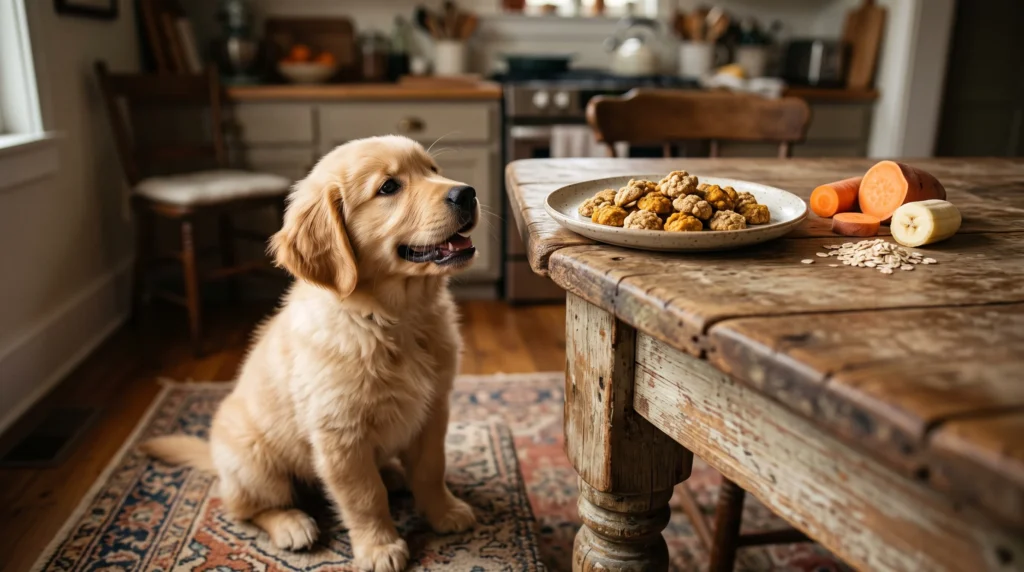
Bringing home a puppy means a lot of firsts: first walk, first vet visit, and first training session, where treats quickly become your best tool. But puppies aren’t just small adult dogs. Their digestive systems are still maturing, their bodies are building bones and muscle at a rapid pace, and their tiny stomachs can be upset by things an adult dog would shrug off.
So what actually makes a treat safe and nutritious for a growing puppy? This guide covers the ingredients to look for, the ones to avoid, how much to give, and how to make treat time both healthy and fun.
Why Puppies Need Different Treats Than Adult Dogs
Puppies grow fast, and their nutritional needs reflect that. Their main meals are formulated to provide the protein, calcium, and calories they need for healthy development. Treats are not meant to replace any of that. They’re meant to support training and bonding without throwing the diet off balance.
There are three reasons puppy treats deserve extra thought:
- Sensitive digestion. A puppy’s gut is still adapting to solid food, so rich, greasy, or heavily processed treats are more likely to cause loose stools or vomiting.
- Small mouths and airways. Hard or oversized treats can be a choking hazard or hurt developing teeth.
- Habits form early. The treats you choose now shape your puppy’s tastes and your training routine for years.
The Hallmarks of a Safe Puppy Treat
1. Simple, Recognizable Ingredients
The best puppy treats have short ingredient lists you can understand. Whole foods such as oats, banana, pumpkin, sweet potato, and plain cooked chicken are easy for most puppies to digest. If a label is full of unpronounceable additives, artificial colours, or vague “meat by-products,” keep looking.
2. The Right Size and Texture
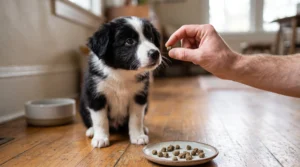
Puppy treats should be small enough to swallow easily, ideally pea-sized for training. Texture matters too. Softer, chewy treats are gentler on baby teeth than rock-hard biscuits, especially while your puppy is teething.
3. No Harmful Additives
Avoid treats with excess salt, added sugar, or artificial preservatives. Puppies don’t need any of these, and they can add up quickly in a small body.
4. Appropriate Calories
A good rule of thumb is that treats should make up no more than about 10% of your puppy’s daily calories. Because puppies are so small, even a few extra treats can make up a bigger share of the day than you’d expect, so keep portions tiny.
Nutritious Ingredients That Work Well for Puppies
Many everyday foods make wholesome treat ingredients when prepared plainly:
- Oats: A gentle source of fiber that suits many sensitive tummies.
- Banana: Naturally sweet and rich in potassium, best in moderation.
- Pumpkin (plain, canned): A fiber-rich ingredient many owners use to support digestion. Make sure it’s pure pumpkin, not pie filling.
- Sweet potato: Cooked and mashed, it adds fiber and vitamins.
- Carrot: Crunchy and low in calories, it can be served cooked and soft for younger puppies.
- Plain cooked chicken: A high-value reward for training, with no seasoning, skin, or bones.
If you want to try baking, recipes built on these ingredients are a great starting point. Our banana oat dog treats are soft, simple, and easy to break into puppy-sized pieces, and our pumpkin dog treats are a good option when you want a fiber-friendly ingredient on the menu.

Ingredients to Avoid Completely
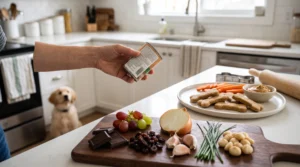
Some foods that seem harmless are dangerous for dogs of any age, and puppies are especially vulnerable because of their small size. Never include these in homemade or store-bought treats:
- Xylitol: An artificial sweetener found in some peanut butters, baked goods, and gum. It is extremely toxic to dogs. Always check the label.
- Chocolate and cocoa: Toxic to dogs.
- Grapes and raisins: Can cause kidney damage.
- Onions, garlic, and chives: Can harm red blood cells.
- Macadamia nuts: Can cause weakness and other symptoms.
- Cooked bones: They can splinter and cause injury.
If your puppy eats something questionable, contact your veterinarian or a pet poison helpline right away rather than waiting for symptoms
 .
How to Introduce New Treats Safely
Even a perfectly safe treat can upset a puppy’s stomach if it’s introduced too fast. Follow these steps:
- Start with a tiny amount. Offer a small piece and wait 24 hours.
- Watch for reactions. Loose stools, vomiting, itching, or lethargy are signs to stop and check with your vet.
- Add one new food at a time. If you introduce several items at once, you won’t know which one caused a problem.
- Stay consistent. Once a treat works well, stick with it for training so your puppy’s digestion stays stable.
Homemade vs. Store-Bought Puppy Treats
Both can be good choices, as long as you know what’s in them.
Homemade treats give you full control over ingredients, which is helpful if your puppy has sensitivities. They’re also budget-friendly. The trade-off is a shorter shelf life, since there are no preservatives. Store them in an airtight container, refrigerate or freeze extras, and discard anything that looks or smells off.
Store-bought treats are convenient, so look for ones made specifically for puppies, with clear ingredient lists and a “complete and balanced” or appropriate life-stage statement where relevant. If you want a simple place to start baking, try our homemade dog biscuits with 3 ingredients, which are easy to scale down into puppy-friendly bites.
Smart Treat Habits for Growing Puppies
- Use treats with purpose. Reward good behavior right away so your puppy connects the treat to the action.
- Break treats into tiny pieces. A small taste works just as well for training and keeps calories low.
- Count treats as part of the daily diet. If you’ve done a long training session, trim your puppy’s meal slightly if your vet recommends it.
- Always provide fresh water. Treats, especially dry ones, are best followed by a drink.
- Supervise chewing. Never leave a puppy alone with a new treat.
Frequently Asked Questions
At what age can puppies start eating treats?
Most puppies can begin small training treats once they’re eating solid food, usually around 8 weeks old. Check with your veterinarian about what’s right for your puppy.
How many treats can a puppy have per day?
Keep treats to roughly 10% of daily calories, and break them into tiny pieces. Your vet can help you work out an exact amount for your puppy’s size and breed.
Are homemade treats better than store-bought?
Not automatically. Homemade treats give you control over ingredients, while good store-bought treats offer convenience and consistency. What matters is that the treat is simple, safe, and appropriately sized.
Can puppies eat fruit and vegetables?
Many are fine in small amounts, such as banana, cooked carrot, and plain pumpkin. Always avoid grapes, raisins, onions, and garlic.
Final Thoughts
A safe, nutritious puppy treat comes down to a few basics: simple ingredients, tiny portions, no harmful additives, and gradual introduction. Keep treats as a small part of a balanced diet, watch how your puppy responds, and check with your veterinarian whenever you’re unsure. With the right choices, treat time can be one of the best parts of raising a happy, healthy dog.