

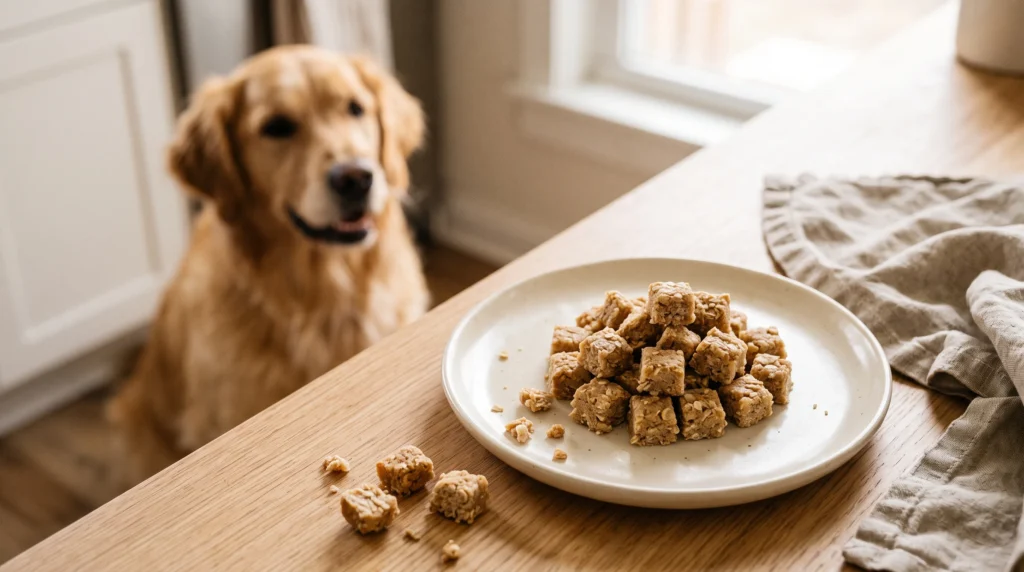
Anyone who has trained a dog knows the problem. You’re halfway through a session, your dog is focused, and you reach into your pouch for a reward. The treat is too big, so your dog spends 20 seconds chewing it and loses focus. Or it crumbles into dust in your pocket.
The best training treats are soft, smell great, and tear into pea-sized pieces with your fingers. This guide shows you how to bake them at home with simple ingredients, and how to get the texture right every time.
What Makes a Good Training Treat?
Training treats work differently from everyday snacks. A good one has these qualities:
- Small: about the size of a pea or a fingernail, so your dog swallows it quickly and stays focused.
- Soft: hard biscuits take too long to chew and slow your session down.
- Easy to break: you can split one treat into several rewards without crumbs.
- Strongly scented: dogs decide what’s worth working for mostly by smell.
- Low in calories: a busy session can use 30 to 60 rewards, and the calories add up.
Store-bought soft treats often contain extra sugar, glycerin, or preservatives. Making your own lets you control the ingredients and the texture.
Why Soft Treats Break Apart (and Why That’s Useful)
The texture comes from moisture and binders. A treat made with too much flour is dry and crumbly. A treat with too much moisture turns gummy and sticks together. The recipe below balances cooked chicken, egg, and oat flour. The egg holds the dough together while the chicken keeps it moist, so it tears cleanly instead of shattering.
If your dog has trouble with hard biscuits, you may also like our guide to soft and chewy dog treats for puppies and seniors. It covers more recipes in this style.
Ingredients
This recipe makes about 150 pea-sized pieces.
- 1 cup cooked chicken breast, finely shredded or minced (unseasoned)
- 1 large egg
- 1 cup oat flour, plus extra for dusting (blend rolled oats into a fine powder if needed)
- 2 tablespoons unsweetened applesauce
- ¼ cup water or unsalted chicken broth (onion-free and garlic-free)
Optional: 1 teaspoon ground flaxseed for extra fiber.
Chicken is a popular training flavor, and our post on chicken flavored dog treats has more ideas if your dog loves it.
Step-by-Step Instructions
Step 1: Prepare the Oven and Pan
Preheat your oven to 350°F (175°C). Line a rimmed baking sheet with parchment paper. A pan with edges keeps the dough from sliding as you spread it.
Step 2: Blend the Wet Ingredients
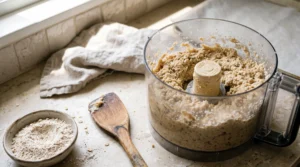
Add the shredded chicken, egg, applesauce, and water or broth to a food processor. Blend until the mixture looks like a coarse paste. If you don’t have a processor, mince the chicken as finely as you can and mix by hand.
Step 3: Add the Oat Flour
Pour in the oat flour and pulse or stir until a thick, sticky dough forms. It should look like a very soft cookie dough. If it’s too wet to spread, add oat flour one tablespoon at a time. If it’s too dry, add a splash of water.
Step 4: Spread the Dough Thin
Place the dough on the parchment. Use a spatula or a second sheet of parchment on top to press and roll it into an even layer about ¼ inch thick. A thin, even layer bakes evenly and breaks apart easily later. Thick spots stay doughy and chewy, and edges can burn.
Step 5: Score Before Baking
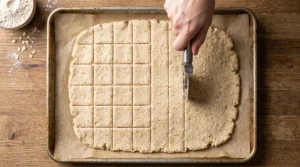
Use a knife or pizza cutter to cut the dough into a grid of small squares, about ½ inch across. Scoring now makes it simple to snap the treats apart after baking. You don’t need to separate the squares. Just cut lines through the dough.

Step 6: Bake
Bake for 15 to 18 minutes, until the surface feels dry and slightly springy when pressed. The edges may turn lightly golden. Don’t overbake, because the treats will harden and lose the soft texture that makes them useful for training.
Step 7: Cool and Break Apart
Let the sheet cool for 10 minutes, then lift out the treats and break them along the scored lines. For different jobs, you can tear the squares into even smaller crumbs with your fingers, which is helpful for small dogs or for rapid-fire rewards.
How to Keep the Texture Soft
If your treats turn out too hard or too crumbly, try these fixes:
- Too crumbly: the dough was too dry. Add a little more egg or applesauce next time.
- Too hard: you baked them too long or too thin. Reduce the time by two to three minutes.
- Too sticky or gummy: the dough had too much moisture. Add a little more oat flour.
- Falling apart in your pouch: store them in a container that lets them breathe a little, such as a pouch with a paper towel, so they don’t sweat.
Keeping Calories Under Control
Training can involve dozens of rewards in one session, so size matters. Treats should make up no more than about 10% of your dog’s daily calories. Reduce your dog’s regular meals slightly on heavy training days, or use part of the daily kibble ration as rewards.
For dogs that need to watch their weight, our collection of low calorie dog treats for overweight dogs is a helpful companion.
Storage Tips
Soft treats contain moisture, so they spoil faster than dry biscuits.
- Refrigerator: up to 5 days in an airtight container.
- Freezer: up to 3 months. Freeze the scored sheet in a single layer first, then transfer the pieces to a freezer bag so they don’t clump.
- Thawing: take out a small handful at a time. They thaw in about 10 minutes at room temperature.
Discard any treats that smell sour or show signs of mold.
Safety Notes
- Make sure the chicken is fully cooked and contains no salt, onion, garlic, or seasoning.
- Check any broth label carefully. Many contain onion or garlic, which are toxic to dogs.
- Introduce new treats gradually, especially if your dog has a sensitive stomach.
- If your dog has food allergies or a medical condition, check with your veterinarian first.
Frequently Asked Questions
Can I use a different meat?
Yes. Cooked turkey or lean ground beef works well. Just keep it unseasoned and finely minced.
Can I use regular flour instead of oat flour?
Whole wheat flour works for dogs without grain sensitivities, but oat flour is gentler on most stomachs.
How small should training treats be?
About the size of a pea for medium and large dogs, and even smaller for toy breeds.
Can I skip the egg?
You can replace it with two extra tablespoons of applesauce, though the treats may be a little more fragile.
Final Thoughts
Good training treats don’t need to be fancy. They need to be small, soft, and easy to tear, so your dog stays engaged and you stay in rhythm. With a simple mix of chicken, egg, and oat flour, you can bake a whole sheet in under 30 minutes and keep a stash in the freezer for every session. Score them, bake them thin, and break them apart as you need them.