


Missing teeth don’t mean your dog has to miss out on treat time. Many dogs lose teeth with age, dental disease, or injury, and a hard biscuit can quickly turn from a reward into a painful chore. The good news is that plenty of soft, easy-to-chew treats are both safe and delicious. This guide explains what to look for, which ingredients work best, and how to bake a simple soft treat at home.
Why Tooth Loss Changes What Your Dog Can Eat
Dogs with few or no teeth can still enjoy food, but chewing is harder. Hard biscuits, rawhide, and dense jerky can irritate sore gums or be swallowed in large pieces, which raises the risk of choking or digestive upset.
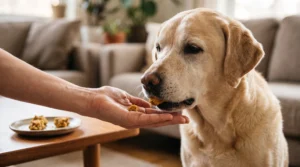
Soft treats solve this problem. They can be mashed with the tongue and gums, and they are gentle on tender mouths. Many toothless dogs eat comfortably and enjoy their treats once the texture is right.
One important note: tooth loss is often a sign of periodontal disease. If your dog is losing teeth, drooling more, dropping food, or avoiding meals, book a vet visit. Treats can make eating easier, but they don’t treat the underlying problem.
What Makes a Good Soft Treat?
When choosing or making treats for a dog with missing teeth, look for these qualities:
- A soft, pliable texture that you can easily squish between your fingers
- Small portions, ideally pea-sized to thumbnail-sized, so nothing needs real chewing
- Simple ingredients that are easy on the stomach
- Low sugar and low fat, since older dogs are prone to weight gain and pancreatitis
- No hard add-ins like whole nuts, seeds, or crunchy bits
For a wider selection of ideas, see our roundup of soft senior dog treats, which suits dogs of any age with chewing difficulties.
Best Soft Treat Ingredients for Toothless Dogs
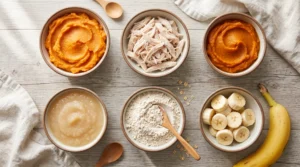
Some ingredients are naturally soft or turn soft when cooked:
Sweet potato. Cooked and mashed, it is smooth, mildly sweet, and rich in fiber.
Banana. Ripe banana is soft, easy to mash, and works as a natural binder.
Pumpkin puree. Plain canned pumpkin adds moisture and fiber and is gentle on digestion. Make sure the label says pure pumpkin, not pie filling.
Unsweetened applesauce. It adds moisture without added sugar.
Oat flour. It creates a tender dough that stays soft after baking.
Plain cooked chicken or turkey. Shredded finely or blended, it adds protein and strong flavor.
If your dog loves pumpkin, you’ll find more soft, fiber-friendly ideas in our pumpkin dog treats guide.
Soft Sweet Potato and Banana Treat Recipe
These treats stay tender and can be broken into tiny pieces. The recipe makes about 30 small treats.
Ingredients
- 1 cup cooked, mashed sweet potato (cooled)
- 1 ripe banana, mashed
- 1 egg
- 1 tablespoon unsweetened applesauce
- 1½ cups oat flour (blend rolled oats into a fine powder if needed)
- ½ teaspoon cinnamon (optional)
Instructions
Step 1: Preheat the oven. Heat to 350°F (175°C) and line a baking sheet with parchment paper.
Step 2: Mix the wet ingredients. In a large bowl, combine the sweet potato, banana, egg, and applesauce. Stir until smooth.
Step 3: Add the oat flour. Fold in the oat flour and cinnamon until a soft, slightly sticky dough forms. If it feels too wet, add a little more oat flour, one tablespoon at a time.
Step 4: Shape the treats. Scoop small teaspoon-sized portions onto the baking sheet and flatten them slightly. Keeping them small and thin helps them stay soft and easy to eat.
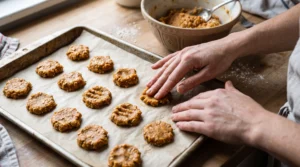
Step 5: Bake briefly. Bake for 12 to 15 minutes. The treats should be set but still tender. Baking longer makes them firm, which defeats the purpose.
Step 6: Cool and store. Let them cool completely on a rack before serving.
How to Serve Soft Treats Safely
A few simple habits make treat time easier and safer:
- Break treats into smaller pieces if your dog is small or very sensitive.
- Warm them slightly (a few seconds in the microwave, then cool to room temperature). Gentle warmth can make them more aromatic and appealing, especially for dogs with a weaker appetite.
- Supervise your dog, especially when trying a new texture.
- Watch the calories. Treats should make up no more than 10% of your dog’s daily food intake.
If your dog finds even soft treats uncomfortable, try our chewy treats for sensitive gums, which are designed to be gentle on sore mouths.
Storage Tips
Soft treats hold more moisture, so they spoil faster than crunchy biscuits.
- Refrigerator: up to 5 to 7 days in an airtight container
- Freezer: up to 3 months in a sealed bag. Thaw a few at a time.
Discard any treats that smell sour or show mold.
Ingredients to Avoid
Whether you bake at home or buy treats, never use these ingredients:
- Xylitol, an artificial sweetener found in some peanut butters and baked goods, toxic to dogs
- Grapes and raisins
- Onions, garlic, and chives
- Chocolate and caffeine
- Macadamia nuts
- Excess salt, sugar, or fat
When in doubt, check with your vet before introducing a new food.
Frequently Asked Questions
Can dogs with no teeth eat dry kibble?
Many can, but some struggle. Soaking kibble in warm water or switching to a soft food can help. Your vet can advise what suits your dog best.
Are store-bought soft treats okay?
Often yes, but read the label. Some soft commercial treats are high in sugar, salt, or artificial additives. Short ingredient lists are usually better.
How do I know if my dog’s mouth hurts?
Signs include dropping food, chewing on one side, bad breath, drooling, pawing at the mouth, and reduced appetite. These are good reasons to see your vet.
Can I freeze soft treats?
Yes, freezing is a great way to keep a batch fresh. Thaw only what you need.
Final Thoughts
Losing teeth is a normal part of life for many dogs, especially seniors, and it doesn’t have to end the fun of treats. With soft textures, small portions, and simple, wholesome ingredients like sweet potato, banana, and oat flour, you can keep treat time enjoyable and comfortable. Pair good treats with regular vet checkups, and your toothless companion can stay happy and well fed for years.