
Every dog owner knows the moment: the couch cushion is safe, but your dog is staring at you, looking for something to chew. Chewing is a natural, healthy behavior. It relieves boredom, burns energy, and can help keep teeth cleaner. The problem is that many popular chews cause trouble, from broken teeth to digestive blockages.
This guide explains what makes a chew digestible, which options are widely considered safer, and how to reduce risk. Before the details, one honest point: no chew is completely risk-free for every dog. Any chew can cause problems if it’s the wrong size, if your dog swallows large chunks, or if your dog has a sensitive stomach. The goal is to choose well and supervise.
What Makes a Dog Chew Digestible?
A digestible chew breaks down in the stomach and intestines instead of staying in large, hard pieces. Look for these qualities:
- Simple, single-ingredient formulas such as dried beef or sweet potato
- Softer texture that softens with saliva rather than splintering
- No artificial additives, dyes, or heavy processing
- A size that suits your dog, so it can’t be swallowed whole
Chews that fail these tests, such as cooked bones, hard plastic, and some heavily processed rawhide, are the ones most often linked to emergency vet visits.
Chews to Be Careful With
Knowing what to avoid is as helpful as knowing what to buy.
- Cooked bones can splinter and injure the mouth, throat, or intestines.
- Rawhide can swell in the stomach, and large pieces may cause blockages. Many vets recommend skipping it.
- Very hard items like antlers, hooves, and hard nylon can crack teeth. A good rule of thumb: if you wouldn’t want to be hit on the knee with it, it’s too hard for your dog’s teeth.
- Small chews that fit entirely in the mouth are a choking hazard.
Safer Edible Chew Options
Bully Sticks
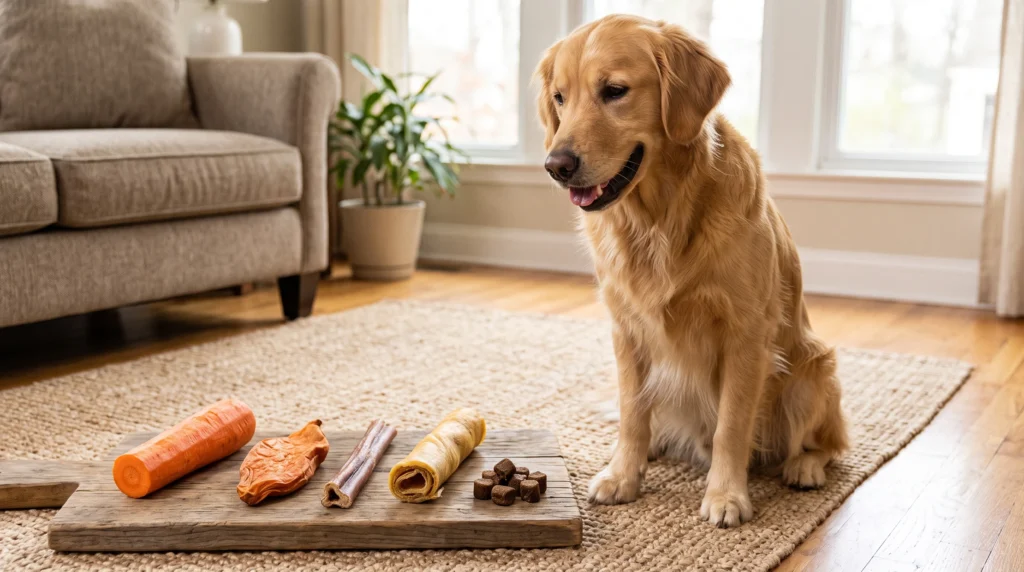
Bully sticks are single-ingredient beef chews that most dogs digest well. They are long-lasting and softer than bones. They’re also calorie-dense, so count them as a treat, not a snack to hand out freely.
Sweet Potato Chews
Dried sweet potato chews are plant-based, high in fiber, and chewy without being rock hard. They suit dogs with beef sensitivities and are easy to make at home by slicing and dehydrating.
Collagen Chews
Collagen sticks are made from animal collagen and generally break down fairly easily. They can be a good middle ground for moderate chewers.
Soft, Chewy Treats
Dogs with sensitive gums, puppies, and seniors often do better with softer options. Our guide to chewy dog treats for sensitive gums has ideas that are easy on the mouth and gentle on digestion.
Vegetable Chews
Raw carrots, cut into sizes your dog can’t swallow whole, make a cheap, low-calorie chew. Larger pieces keep your dog working at them while the texture stays manageable.

Match the Chew to Your Dog
The right chew depends on your dog’s chewing style.
Gentle chewers nibble and lick, so softer chews and sweet potato options work well.
Moderate chewers like to gnaw, so bully sticks and collagen chews are a good fit.
Aggressive chewers can destroy almost anything quickly, which raises the risk of swallowing big pieces. If your dog fits this description, browse our roundup of long-lasting dog chews for aggressive chewers and always supervise.
Puppies have developing teeth and sensitive stomachs. Choose soft, puppy-appropriate chews and check labels for age guidance.

Safety Rules Every Owner Should Follow
Even the most digestible chew needs sensible handling.
- Supervise every chew session. Never leave your dog alone with a chew, especially a new one.
- Choose the right size. The chew should be larger than your dog’s mouth can swallow whole.
- Take it away when it gets small. When a chew shrinks to a size your dog could swallow, throw out the remainder.
- Introduce one new chew at a time. This helps you spot what causes stomach upset.
- Count the calories. Chews add up. Together with treats, they should stay under about 10% of daily calories.
- Provide fresh water. Chewing is thirsty work, and water helps digestion.
- Store chews properly. Keep them in a cool, dry place and check for mold or an off smell.

Chews and Dental Health
Chewing can help scrape away plaque and tartar, but a chew isn’t a replacement for brushing or vet dental care. If dental health is your main goal, our list of dental chews for cleaner teeth explains what to look for. Choose chews that bend slightly under pressure, and avoid anything that doesn’t give at all.
Signs a Chew Isn’t Agreeing With Your Dog
Contact your vet if you notice any of these after your dog has had a chew:
- Repeated vomiting
- Loose stools or diarrhea lasting more than a day
- Straining to poop, or no bowel movement
- Bloated or painful belly
- Loss of appetite or unusual lethargy
- Gagging or choking
These signs can indicate a blockage or irritation, and a blockage can become an emergency. When in doubt, call your vet.
Frequently Asked Questions
Are bully sticks fully digestible?
Most dogs digest them well, but “fully” depends on the dog and the chunk size. Take the small end away before your dog swallows it.
What is the safest chew for a puppy?
Soft, age-appropriate chews, supervised and sized correctly, are usually the best choice. Ask your vet if you’re unsure.
Can I give my dog a chew every day?
Many dogs can, but watch the calories and your dog’s weight. Offer variety and give them in moderation.
Do dental chews replace brushing?
No. They help, but regular brushing and professional care remain the gold standard.
Final Thoughts
The best chew is one that suits your dog’s size, age, and chewing style, breaks down well, and is given under supervision. There’s no such thing as a guaranteed zero-risk chew, but with simple, single-ingredient options and a few safety habits, you can make chew time safe and satisfying. When in doubt, ask your vet.