

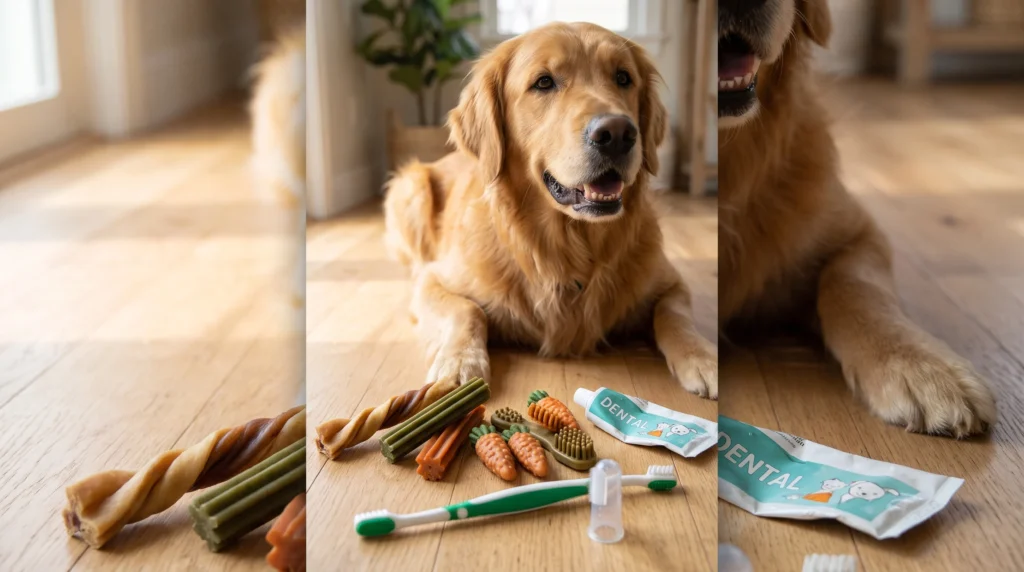
Most dogs show signs of dental trouble by the time they’re three years old. Bad breath, yellow buildup on the teeth, and red gums are common warning signs. Dental treats won’t replace a vet cleaning or regular brushing, but the right one can help slow plaque and tartar between visits. With so many options on the shelf, it’s hard to know which brands are worth buying. This guide compares the most popular dental treat brands side by side so you can choose with confidence.
How Dental Treats Work
Dental treats clean teeth in two main ways. The first is mechanical: the texture scrapes plaque off the tooth surface as your dog chews. The second is chemical: some treats include ingredients meant to limit plaque or tartar buildup.
Chewing time matters too. A treat your dog swallows in five seconds does very little. A treat that takes a few minutes to finish gives more cleaning contact. For a deeper look at how long chewing actually helps, see our guide to dental chews that clean teeth.
What to Look for Before You Buy
Compare these factors before choosing a brand:
- The VOHC seal. The Veterinary Oral Health Council tests products for plaque and tartar control, and a product that has earned its seal has shown results in trials. Because the accepted list changes, check vohc.org for the current list before you buy.
- Size and hardness. Match the treat to your dog’s weight and chewing style. Very hard treats can crack teeth.
- Ingredients. Look for a short, clear list. Avoid artificial colors and unnecessary fillers.
- Calories. Many dental chews are calorie-dense, which matters for small or overweight dogs.
- Digestibility. Choose a treat that breaks down well, especially for dogs prone to stomach upset.
Side-by-Side Comparison
The table below summarizes popular dental treat brands by type and best use. Formulas and sizes change, so check the current label and VOHC list before buying.

| Brand | Type | Best For | Things to Watch |
|---|---|---|---|
| Greenies | Soft, chewy daily chew | Dogs who chew steadily | Calorie-dense; choose the correct size |
| Purina DentaLife | Textured daily chew | Everyday maintenance | Check size by weight |
| Virbac C.E.T. VeggieDent | Chewy, plant-based | Dogs who like a firmer chew | Strong smell for some owners |
| OraVet | Daily dental chew | Dogs with active plaque buildup | Often sold through vets |
| Whimzees | Shaped vegetable-based chews | Dogs who enjoy a longer chew | Large pieces; supervise |
| Milk-Bone Brushing Chews | Twisted chew | Budget-friendly maintenance | Check the VOHC list for status |
No single brand is best for every dog. A fast chewer, a senior dog with sensitive teeth, and a small-breed dog all need different things.
Brand Notes
Greenies are among the best-known options. They have a soft, chewy texture that bends around the teeth, and many dogs find them very appealing. They’re also high in calories, so count them as part of the day’s treat allowance.
Purina DentaLife chews have a ridged texture designed to increase tooth contact. They suit dogs who like a firm chew and are widely available.
Virbac C.E.T. VeggieDent is a plant-based chew with a firm texture. It’s a good option for dogs who prefer a longer chew, though the smell isn’t for everyone.
OraVet is designed for daily use and is often recommended by vets for dogs prone to plaque.
Whimzees are vegetable-based chews in different shapes, such as brushes and stars. They’re popular with dogs who love a long chew, but large pieces call for supervision.
Milk-Bone Brushing Chews are an affordable, easy-to-find option for owners who want a simple daily routine.
Choosing the Right Treat for Your Dog
Small breeds need small, soft treats. Small mouths are prone to crowded teeth and early tartar, so pick a size made for their weight.
Large breeds and strong chewers need durable chews, but the treat shouldn’t be harder than they can safely manage. If you can’t make a dent in it with your fingernail, it may be too hard.
Puppies and seniors need softer textures. Check with your vet before giving a puppy a dental chew.
Dogs with sensitive stomachs do better with simple ingredient lists and gradual introductions.
If you’re comparing options beyond dental chews, our roundup of the best dog treat brands covers other categories as well.

Safety Tips for Dental Treats
- Always supervise. Never leave your dog alone with a chew.
- Pick the right size. A treat too small can become a choking hazard.
- Throw away small leftovers. Once a chew is worn down to a swallowable piece, remove it.
- Watch the calories. Treats should stay under 10% of daily calories.
- Know what to avoid. Some ingredients are best skipped entirely, so review our list of ingredients to avoid in dog treats.
Treats Are Only Part of Dental Care
A dental treat is a helpful extra, not a complete plan. For the best results:
- Brush regularly. Brushing a few times a week with dog-safe toothpaste is the gold standard.
- Schedule vet checkups. Your vet can spot problems early and recommend professional cleanings.
- Feed a balanced diet. Good nutrition supports overall health, including the mouth.
- Watch for warning signs. Persistent bad breath, drooling, bleeding gums, or difficulty eating deserve a vet visit.

Frequently Asked Questions
How often should I give my dog a dental treat?
Many brands are designed for once-daily use, but follow the package directions and your vet’s advice.
Are dental treats enough to keep my dog’s teeth clean?
No. They help reduce buildup, but brushing and professional care are still important.
Can puppies have dental chews?
Some are suitable for puppies, but check the label for age and weight guidance and ask your vet first.
Are grain-free dental treats better?
Not necessarily. Choose based on your dog’s individual needs, and talk to your vet if you have concerns.
Final Thoughts
The best dental treat is one that suits your dog’s size, chewing style, and health needs, and that you can give consistently. Check for the VOHC seal, match the size to your dog, and keep an eye on calories. Combine treats with brushing and regular vet visits, and your dog’s smile will stay healthier for longer.