

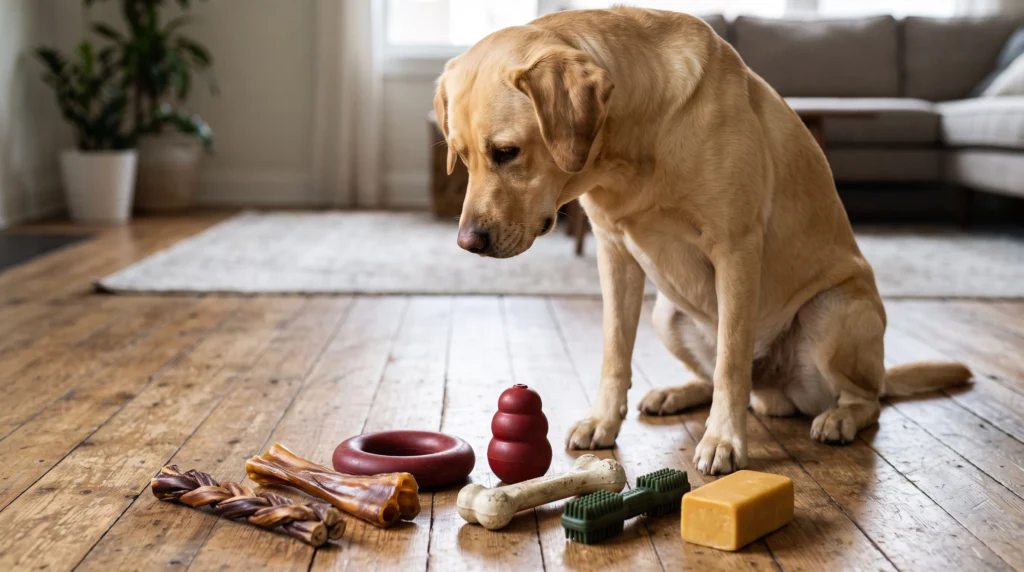
If your dog destroys a “tough” toy in ten minutes, you know the problem. Aggressive chewers need chews that last, but durability alone isn’t enough. A chew that is too hard can crack teeth, and one that breaks into large pieces can cause choking or a blockage. This guide covers seven long-lasting options, how to choose safely, and the mistakes to avoid.
What Makes a Chew Safe for Heavy Chewers?
Before the list, a few basics apply to every chew:
- Size matters. The chew should be larger than your dog’s mouth so it can’t be swallowed whole.
- Try the thumbnail test. If you can’t press a dent into the chew with your thumbnail, it may be hard enough to damage teeth.
- Supervise every session. Even the best chew can become a hazard once it’s chewed down.
- Throw away small remnants. When a chew shrinks to a size your dog could swallow, take it away.
- Count the calories. Chews add up, so factor them into your dog’s daily intake.
Not sure what belongs in your dog’s diet? Our guide to the healthiest dog treat ingredients explains what to look for and what to skip.

1. Durable Rubber Chew Toys
Thick, natural-rubber toys are a top choice for strong chewers. They have some give, which is gentler on teeth than harder materials, and they hold up well against powerful jaws. Look for toys labeled for “extreme” or “power” chewers, and choose a size one step larger than you think you need.
Best for: Dogs who need a long-term, reusable chew.
Tip: Replace the toy as soon as you see deep cracks or chunks coming loose.
2. Stuffable Rubber Toys
A hollow rubber toy turns chew time into a puzzle. Fill it with a bit of plain pumpkin, mashed banana, or a spoonful of unsweetened yogurt, then freeze it. The frozen filling makes the session last far longer and keeps your dog mentally busy.
Best for: Dogs who chew out of boredom or excess energy.
Tip: Freezing stretches the time even more, and our post on frozen dog treats that keep dogs busy has ideas to try.
3. Bully Sticks
Bully sticks are single-ingredient chews made from beef muscle. They are highly digestible compared with rawhide and most dogs love the flavor. Thicker, braided versions last longer than thin ones.
Best for: Dogs who want a tasty, natural chew.
Tip: Use a bully stick holder so your dog can’t swallow the last small piece. They are also fairly high in calories, so offer them in moderation. Buy from a trusted source, since quality varies.
4. Beef Tendons and Trachea Chews
These chews are tough and fibrous, so they take a while to wear down. Many are naturally rich in collagen and cartilage, and the chewy texture gives dogs a satisfying workout without being rock hard.
Best for: Medium to large dogs who finish softer chews quickly.
Tip: Start with short sessions to see how your dog’s stomach handles them. Some dogs get loose stools from rich animal chews.
5. Nylon Chews Made for Power Chewers
Nylon chews are designed to be gnawed rather than eaten. As your dog chews, tiny bristle-like ridges form on the surface, which can help scrape away plaque. Choose a product that matches your dog’s weight and chewing strength.
Best for: Dogs who need a long-lasting, non-edible option.
Tip: Nylon chews are not meant to be swallowed. Take the chew away if large pieces start to break off.
6. Dental Chews Approved for Oral Health
Some chews are made to reduce plaque and tartar as well as keep your dog busy. Look for products that carry the Veterinary Oral Health Council (VOHC) seal, which means the product has met standards for plaque or tartar control. Dental chews are usually eaten in one sitting, so they are better as a daily addition than a long-term distraction.
Best for: Dogs that need help with doggy breath and oral health.
Tip: If you want to know which ones are worth buying, read our breakdown of 5 dental chews that help clean teeth.
7. Hard Cheese Chews (With Caution)
Hard, dried cheese chews, often made from yak or cow milk, last a long time and are popular with heavy chewers. They are also very hard. Many vets recommend softening them first or microwaving small leftover pieces so they puff up into a safer, crunchy treat. If your dog’s teeth are worn, cracked, or sensitive, skip this one.
Best for: Healthy, strong teeth and dogs that tolerate dairy.
Tip: Never leave your dog alone with a hard cheese chew.
Chews to Avoid
Some popular options carry real risks for aggressive chewers. Be cautious with:
- Cooked bones. They can splinter and cause serious internal injuries.
- Weight-bearing animal bones. These are very hard and are a common cause of broken teeth.
- Antlers and hooves. Both can fracture teeth.
- Tennis balls. The abrasive fuzz can wear down enamel over time.
- Rawhide. It can swell in the stomach and cause blockages in some dogs.
If your vet has told you to avoid certain ingredients because of allergies or health problems, always follow that advice first.

How to Pick the Right Chew for Your Dog
Every dog chews differently, so use these questions to narrow it down:
- How strong is your dog’s bite? A powerful Labrador needs something different from a small terrier.
- How old is your dog? Puppies and seniors often need softer options.
- Does your dog have allergies or digestive issues? Choose single-ingredient chews and introduce them slowly.
- What is the goal? Boredom, anxiety, dental health, and teething each call for a different chew.
Rotating several types also keeps your dog interested and spreads the wear on their teeth.
Signs a Chew Isn’t Working
Stop using a chew right away if you notice:
- Broken or chipped teeth, or bleeding gums
- Vomiting, diarrhea, or a swollen belly after chewing
- Large pieces being swallowed
- Obsessive guarding of the chew
Contact your vet if symptoms continue. Signs of a blockage, such as repeated vomiting, loss of appetite, or lethargy, are an emergency.
Frequently Asked Questions
How long should a chew last for an aggressive chewer?
There is no set number. A good chew should hold up for at least 15 to 30 minutes of supervised chewing, and many last far longer.
Can I give my dog a chew every day?
Yes, if you account for the calories and choose a suitable type. Rotate chews and limit rich ones like bully sticks.
Are edible chews safer than non-edible ones?
Neither is risk-free. Edible chews can cause stomach upset or choking, while non-edible chews can break into dangerous pieces. Supervision is the best protection.
What should I do if my dog swallows a large piece?
Call your vet right away, especially if your dog seems uncomfortable, is gagging, or is vomiting.
Final Thoughts
The best chew for an aggressive chewer is one that lasts, suits your dog’s size and bite, and doesn’t put their teeth or digestion at risk. Start with a durable rubber toy or a stuffed, frozen option, rotate in a few edible chews, and stay close while your dog enjoys them. Check each chew often and replace it when it starts to wear down. With the right mix, you can protect your furniture and your dog’s health at the same time.