
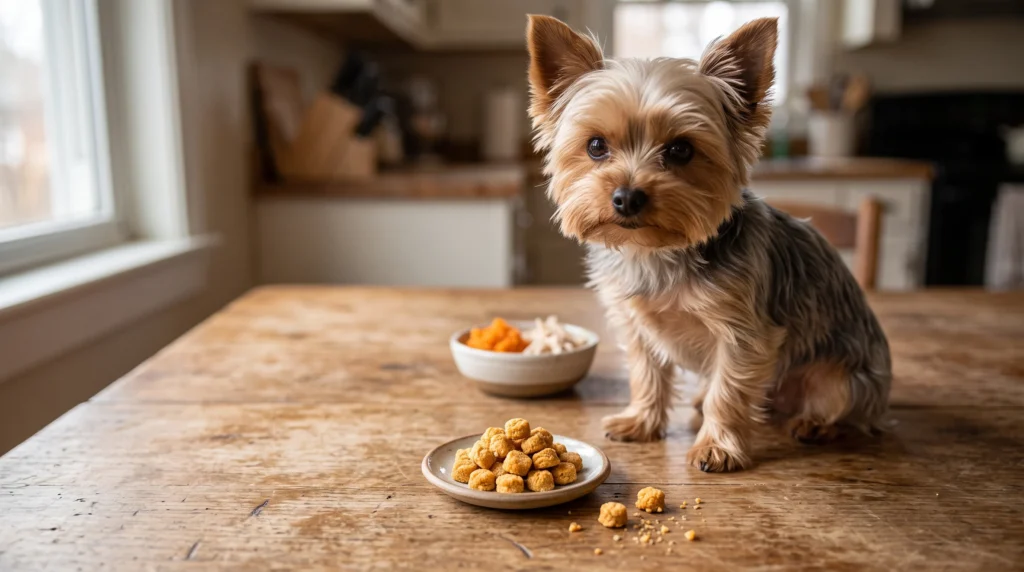
A Yorkshire Terrier weighs just four to seven pounds, has a small jaw, and often has strong opinions about food. Most store-bought treats are made for bigger dogs, so they can be too large, too hard, or too rich for a Yorkie. This guide explains what makes a treat suitable for this breed, how small is small enough, and how to bake a simple batch at home.
Why Yorkies Need Specially Sized Treats
Yorkies are a toy breed, and that affects what they can safely eat.
Choking risk. A treat that is a small bite for a Labrador can block a Yorkie’s throat. Toy breeds are also prone to tracheal collapse, which makes chewing carefully even more important.
Dental crowding. Yorkies have small mouths with crowded teeth, so plaque and tartar build up quickly. Very hard treats can stress their teeth, and very sticky ones can cling to them.
Sensitive digestion. Many Yorkies get upset stomachs from rich, fatty, or heavily seasoned foods. Simple ingredients are the safest choice.
Low blood sugar. Very small dogs and puppies can occasionally develop low blood sugar. This is one more reason to feed regular meals and use treats as extras, not replacements. If your Yorkie seems weak, wobbly, or unusually sleepy, call your vet right away.
For a wider look at what suits little dogs in general, see our guide to the best dog treats for small breeds.
How Small Is “Tiny Enough”?
A good rule is to make Yorkie treats pea-sized to about half an inch across, and no bigger than your dog’s pupil-to-pupil eye width. If a treat is larger, break it in half. Smaller pieces also help with calorie control and make a single treat last through a training session.
Texture matters too. Aim for soft or lightly crisp treats that break apart easily. Avoid rock-hard biscuits, rawhide, and large chews.
How Many Treats Can a Yorkie Have?
Treats should make up no more than about 10% of daily calories. A typical adult Yorkie needs roughly 150 to 250 calories a day, depending on weight and activity, so that leaves only about 15 to 25 calories for treats. That is why tiny treats work so well: your dog gets several rewards without overeating. Your veterinarian can give you a more exact number for your dog.
Ingredients
This recipe makes about 60 pea-sized treats.
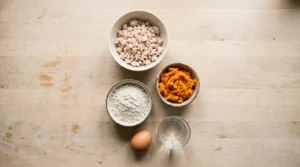
- 1 cup oat flour (blend rolled oats into a fine powder if needed)
- ½ cup cooked chicken breast, finely minced or shredded (no seasoning, skin, or bones)
- ¼ cup plain mashed sweet potato (cooked, with no butter or salt)
- 1 egg
- 1 to 3 tablespoons water, as needed
Optional: 1 teaspoon finely chopped fresh parsley for fresh breath.
Choose plain ingredients only. Never use onion, garlic, xylitol, grapes, raisins, or chocolate, all of which are harmful to dogs.
Step-by-Step Instructions
Step 1: Preheat the Oven
Heat the oven to 350°F (175°C) and line a baking sheet with parchment paper.
Step 2: Mix the Wet Ingredients
In a bowl, combine the mashed sweet potato and egg. Add the minced chicken and stir until evenly mixed.
Step 3: Add the Oat Flour
Stir in the oat flour a little at a time. The dough should be soft and slightly tacky but easy to handle. If it is too dry, add water a teaspoon at a time. If it is too sticky, add a little more oat flour.
Step 4: Shape Tiny Treats
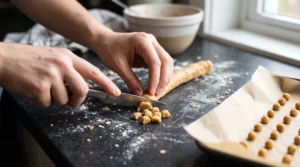
Roll the dough into a thin log about half an inch wide and cut it into small pieces with a knife or bench scraper. You can also press the dough flat, about ¼ inch thick, and cut it into small squares. Smaller is better here.
Step 5: Bake
Spread the pieces on the baking sheet with a little space between them. Bake for 15 to 18 minutes, until the treats are firm and lightly golden.
Step 6: Cool Completely
Let the treats cool on a wire rack for at least 30 minutes. They will firm up as they cool. Check a few by pressing one between your fingers. It should break apart easily, not feel like a pebble.
If your Yorkie loves this flavor profile, our chihuahua treat recipes made for tiny mouths have more ideas that work well for other toy breeds.
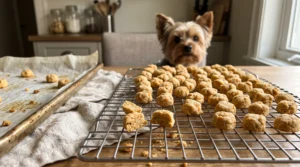
Storage Tips
Because these treats contain fresh chicken and no preservatives, store them carefully:
- Refrigerator: up to 4 to 5 days in an airtight container
- Freezer: up to 3 months in a sealed bag, thawing a handful at a time
Throw away any treats that smell off or show signs of mold.
Using Tiny Treats for Training
Yorkies are smart and eager to please, but they can be stubborn. Pea-sized treats are ideal for training because your dog can swallow them quickly and stay focused on you. Use a soft treat that breaks apart easily, so you can adjust the size even further for puppies or very small adults. For more on this, see our tips for soft training treats that break apart.
Tips for Safe Treat Time
- Supervise every treat. Small dogs can gulp food quickly, so stay nearby.
- Introduce new treats slowly. Start with one or two pieces and watch for loose stools, itching, or vomiting.
- Keep fresh water available.
- Brush your Yorkie’s teeth regularly. Treats are not a replacement for dental care.
- Talk to your vet. Check before changing your dog’s diet, especially if your Yorkie has a health condition or is a young puppy.
Frequently Asked Questions
Can Yorkie puppies eat these treats?
Puppies under about four months have delicate digestion and tiny mouths. Ask your vet first, and crumble the treats into very small pieces.
Can I use another protein instead of chicken?
Yes. Cooked, unseasoned turkey or lean beef also works. Introduce one new protein at a time.
Can I skip the egg?
Yes. Replace it with two extra tablespoons of mashed sweet potato.
Why does my Yorkie turn up their nose at treats?
Some Yorkies are picky. Try a different texture or flavor, and make sure treats are not filling them up before mealtime.
Final Thoughts
The best treat for a Yorkshire Terrier is small, soft, simple, and fed in moderation. These homemade chicken and sweet potato bites give you a safe, budget-friendly way to reward your dog without worrying about size or unnecessary ingredients. Keep portions tiny, watch your dog while they eat, and check with your vet if you have health questions.