


Turmeric has earned its reputation as a human superfood, but over the past few years, it’s become just as popular in the world of dog nutrition. The active compound responsible for its benefits — curcumin — has been studied for its anti-inflammatory and antioxidant properties, making turmeric a popular natural addition to homemade dog treats, especially for senior dogs or those with joint discomfort.
If you’ve been looking for a way to support your dog’s health through food rather than supplements alone, these three turmeric dog treat recipes are a great place to start. Each one is simple, vet-conscious, and made with real, whole-food ingredients.
Why Turmeric Is Good for Dogs
Before diving into the recipes, it helps to understand what makes turmeric worth adding to your dog’s diet in the first place.
It may help with joint discomfort. Many dog owners turn to turmeric for senior dogs or breeds prone to joint issues, as curcumin is believed to help support healthy inflammatory response.
It’s rich in antioxidants. Antioxidants help combat oxidative stress in the body, which is linked to aging and chronic disease.
It supports overall wellness. Some holistic vets recommend small amounts of turmeric as part of a broader approach to immune and digestive health. If you want to explore more whole-food ingredients with similar benefits, check out our guide to immune-boosting dog treats made with superfoods.
A quick but important note: turmeric should always be given in moderation and paired with a pinch of black pepper and a source of healthy fat (like coconut oil), since this combination significantly improves curcumin absorption. Always check with your vet before introducing turmeric regularly, especially if your dog is on medication or has an existing health condition.

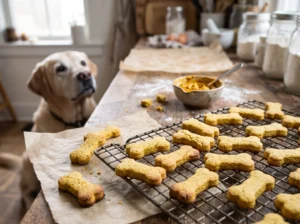
Recipe 1: Turmeric & Pumpkin Biscuits
This recipe pairs turmeric with pumpkin, a gentle, fiber-rich ingredient that’s easy on digestion.
Ingredients:
- 1 ½ cups oat flour
- 1/2 cup canned pumpkin puree (plain, not pie filling)
- 1 teaspoon ground turmeric
- 1/4 teaspoon black pepper
- 1 tablespoon coconut oil, melted
- 1 egg
Instructions:
- Preheat your oven to 350°F (175°C) and line a baking sheet with parchment paper.
- In a bowl, whisk together the pumpkin, egg, and melted coconut oil.
- Add the turmeric and black pepper, stirring until fully combined.
- Gradually mix in the oat flour until a firm dough forms.
- Roll the dough to 1/4-inch thickness and cut into shapes using a cookie cutter.
- Bake for 20–22 minutes, until firm and lightly golden on the edges.
- Cool completely before serving.
These treats are a great next step if your dog already enjoys pumpkin-based snacks — you can compare notes with our dedicated pumpkin dog treats recipe for another gentle, stomach-friendly option.
Recipe 2: Turmeric & Sweet Potato Chews
Sweet potato adds natural sweetness and a chewy texture, making this a favourite among dogs who prefer softer treats.
Ingredients:
- 1 medium sweet potato, cooked and mashed
- 1 cup oat flour
- 1 teaspoon ground turmeric
- 1/4 teaspoon black pepper
- 1 tablespoon olive oil
Instructions:
- Preheat your oven to 325°F (163°C) and line a baking sheet with parchment paper.
- Combine the mashed sweet potato, turmeric, black pepper, and olive oil in a mixing bowl.
- Slowly add the oat flour until the mixture forms a soft, workable dough.
- Roll into small balls and flatten slightly with your palm.
- Bake for 25 minutes, flipping halfway through for even texture.
- Allow to cool fully before storing or serving.
This combination works especially well for dogs who already enjoy root-vegetable-based snacks. For more inspiration, take a look at our full sweet potato dog treats recipe.
Recipe 3: Turmeric & Coconut Oil Bites (No-Bake)
For a quick, no-oven-required option, these turmeric bites come together in minutes and are stored in the freezer or fridge.
Ingredients:
- 1/2 cup natural peanut butter (xylitol-free)
- 2 tablespoons coconut oil, melted
- 1 teaspoon ground turmeric
- 1/4 teaspoon black pepper
- 1 cup rolled oats
Instructions:
- In a bowl, mix the peanut butter, melted coconut oil, turmeric, and black pepper until smooth.
- Fold in the rolled oats until fully combined.
- Roll the mixture into small, bite-sized balls.
- Place on a parchment-lined tray and refrigerate for at least 1 hour, or freeze for a firmer bite.
- Store in an airtight container in the fridge or freezer.
These no-bake bites are perfect for hot days when you’d rather skip the oven entirely — for more easy, no-cook options, browse our collection of no-bake dog treat recipes.

Storage Tips
- Baked treats: Store in an airtight container at room temperature for up to 5 days, or refrigerate for up to 2 weeks.
- No-bake bites: Keep refrigerated for up to 10 days, or freeze for up to 2 months.
- Always let baked treats cool completely before storing to prevent moisture build up and sogginess.
How Much Turmeric Is Safe for Dogs?
As a general guideline, 1/8 to 1/4 teaspoon of turmeric per 10 pounds of body weight per day is considered a reasonable amount for most healthy dogs, though this can vary. Start with a smaller amount to see how your dog tolerates it, and avoid giving turmeric treats daily without veterinary guidance, especially for dogs with gallbladder issues, bleeding disorders, or those on blood-thinning medication.
Final Thoughts
Turmeric is a simple, natural way to add potential anti-inflammatory support to your dog’s diet, and these three recipes make it easy to do so without complicated ingredients or techniques. Whether your dog prefers a crunchy biscuit, a chewy bite, or a no-bake treat, there’s an option here to fit their taste — and your schedule. As always, introduce new ingredients gradually and consult your vet if your dog has any underlying health conditions.