

A Pomeranian is a big personality in a very small body. Most adults weigh only 3 to 7 pounds, so treat size, calories, and texture matter far more than they do for a Labrador or a Golden Retriever. A treat that is a snack for a large dog can be a full meal’s worth of calories for a Pom. This guide explains how to size treats for a toy breed and gives you three simple homemade recipes made with gentle, everyday ingredients.
Why Pomeranians Need Their Own Treat Rules
Toy breeds have different needs from bigger dogs, and a few Pomeranian traits are worth keeping in mind.
Small mouths and crowded teeth. Poms are prone to dental problems, and large, hard treats can be difficult to chew or can break teeth. Small, easy-to-chew pieces are safer.
A delicate windpipe. Many toy breeds can have tracheal sensitivity, so hard chunks that could be swallowed whole are a poor choice.
Easy weight gain. A few extra treats a day can add up quickly on a tiny frame, and extra weight puts stress on small joints.
Sensitive stomachs. Rich or greasy ingredients can upset a toy dog’s digestion fast.
If you want a wider look at products and ingredients that suit small dogs, our guide to the best dog treats for small breeds is a helpful companion to this post.
How Big Should a Pomeranian Treat Be?
A good rule is to make each treat about the size of a pea or a small piece of kibble, roughly a quarter inch across. Tiny treats let you reward your dog many times during a training session without overfeeding.
Treats should make up no more than 10% of your dog’s daily calories. Daily needs vary with weight, age, and activity, and a typical adult Pom often needs somewhere around 150 to 250 calories a day. That leaves only about 15 to 25 calories for treats, so every little bit counts. Ask your vet for a target that fits your own dog.
Ingredients to Avoid
Some foods are unsafe for any dog, and the risk is higher for tiny ones. Never use:
- Xylitol, which is found in some peanut butters and sugar-free products
- Chocolate and caffeine
- Grapes and raisins
- Onions, garlic, and chives
- Macadamia nuts
- Excess salt, sugar, or fat
Recipe 1: Mini Chicken and Sweet Potato Bites
These soft, savory bites are a good option for picky Poms.
Ingredients
- ½ cup cooked, mashed sweet potato
- ¼ cup finely shredded cooked chicken (plain, no seasoning)
- ½ cup oat flour
- 1 egg
Instructions
- Preheat the oven to 350°F (175°C) and line a baking sheet with parchment.
- Mix the sweet potato, chicken, and egg until combined.
- Stir in the oat flour until a soft dough forms.
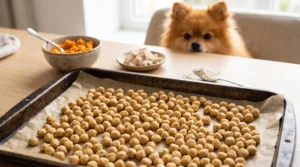
- Pinch off pea-sized pieces and place them on the sheet. They don’t need to be perfectly round.
- Bake for 12 to 15 minutes until firm. Cool completely.
Recipe 2: Peanut Butter Banana Pea-Size Crunchies
Ingredients
- 1 ripe banana, mashed
- 2 tablespoons xylitol-free peanut butter
- ¾ cup oat flour, plus extra for rolling
Instructions
- Preheat the oven to 340°F (170°C).
- Combine the banana and peanut butter, then add the oat flour to form a dough.
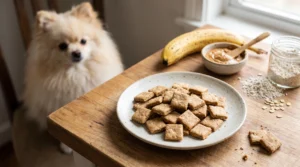
- Roll the dough very thin on a floured surface and cut it into tiny squares with a knife or pizza cutter.
- Bake for 15 to 18 minutes, until dry and lightly crisp.
- Cool fully so they harden slightly.
Peanut butter is calorie-dense, so keep portions especially small with this one.
Recipe 3: Pumpkin Oat Training Bites
This is a low-fat recipe that is gentle on small stomachs.
Ingredients
- ¼ cup plain canned pumpkin (not pie filling)
- ½ cup oat flour
- 1 tablespoon water, if needed
Instructions
- Preheat the oven to 350°F (175°C).
- Mix the pumpkin and oat flour. Add water a teaspoon at a time only if the dough is too dry.
- Roll into a thin sheet and cut into small squares.
- Bake for 12 to 14 minutes. Cool completely.
These work well as everyday rewards. For more ideas that are easy to break into tiny pieces, see our list of training treats for reward sessions.
Storage Tips
Homemade treats have no preservatives, so store them carefully.
- Room temperature: up to 5 days in an airtight container
- Refrigerator: up to 2 weeks
- Freezer: up to 3 months, and since the treats are tiny, you can take out only what you need
Because Pom portions are so small, one batch can last a long time. Freezing in small bags helps keep everything fresh. Throw away any treats that smell off or show mold.
Tips for Treating a Pomeranian Safely
- Break treats smaller if in doubt. A Pom will rarely need more than a crumb-sized piece.
- Count treats into your daily calories. If you give several during training, reduce meal portions slightly.
- Introduce new ingredients one at a time. This makes it easier to spot what upsets your dog’s stomach.
- Supervise every treat. Small dogs can choke more easily.
- Mind dental care. Treats don’t replace brushing, so keep up regular tooth cleaning and vet dental checks.
If your Pom is carrying extra weight, our collection of low-calorie dog treats for overweight dogs offers lighter options.
Frequently Asked Questions
Can Pomeranian puppies eat these treats?
Puppies can eat small amounts of these simple ingredients, but check with your vet first, especially for very young puppies or those with sensitive digestion.
How many treats can my Pomeranian have each day?
It depends on your dog’s weight and food. Keep treats under 10% of daily calories and use pea-sized pieces.
Can I use regular flour instead of oat flour?
Whole wheat flour works for many dogs, but oat flour is often gentler, particularly for sensitive stomachs.
Are these treats good for dental health?
They are small and easy to chew, but they won’t clean teeth the way brushing does.
Final Thoughts
Treating a Pomeranian is all about scale. Tiny portions, simple ingredients, and soft or lightly crisp textures keep treat time safe and fun for the smallest dogs. Start with one recipe, watch how your Pom responds, and adjust from there. A little goes a long way with a dog this small.