

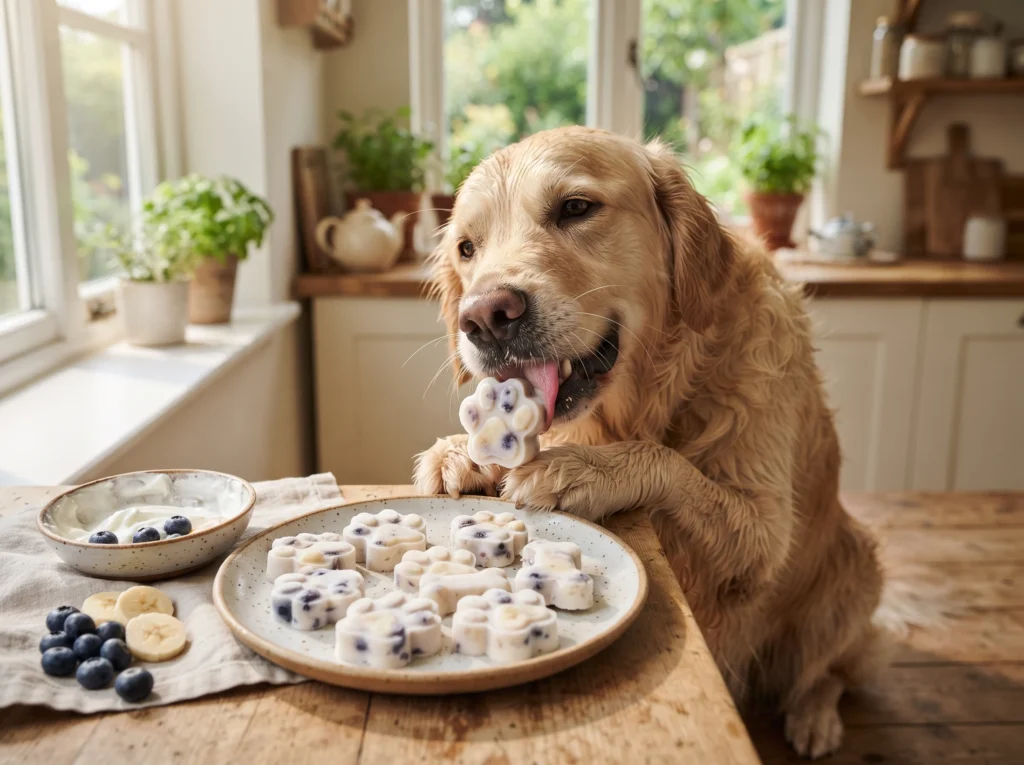
When temperatures climb and your dog starts panting after just a short walk, it’s tempting to reach for something cool and refreshing to share with them. But not every human snack is safe for dogs, and heat exhaustion in pets is a real concern during summer months. That’s where frozen yogurt dog treats come in — a simple, vet-friendly way to help your furry friend beat the heat while getting a tasty, gut-healthy snack in the process.
Unlike ice cream, which is loaded with sugar and often contains dairy in amounts dogs can’t easily digest, plain yogurt is generally well-tolerated by most dogs and even offers some nutritional perks. In this guide, you’ll learn why frozen yogurt treats are a smart summer staple, exactly how to make them, and a few creative variations to keep your dog excited every time the freezer door opens.
Why Frozen Yogurt Treats Are Great for Dogs in Summer
They help with hydration and cooling. Dogs don’t sweat the way humans do — they primarily cool down through panting. A frozen treat gives them a refreshing way to lower their body temperature from the inside out, especially useful after playtime or a walk in the heat.
Yogurt supports digestive health. Plain yogurt contains probiotics, which can support a healthy gut microbiome. Many dogs tolerate yogurt better than other dairy products because the fermentation process reduces lactose content.
It’s a low-mess way to keep dogs occupied. Frozen treats take longer to eat than regular biscuits, which means more entertainment and less time spent begging at the table.
You control the ingredients. Store-bought frozen dog treats can include added sugars, artificial flavors, or fillers. Making your own means you know exactly what’s going into your dog’s bowl.
What Kind of Yogurt Should You Use?
Not all yogurt is created equal when it comes to dogs. Keep these guidelines in mind:
- Choose plain, unsweetened yogurt. Flavored yogurts often contain added sugar or artificial sweeteners.
- Avoid yogurt with xylitol. This is critical — xylitol is highly toxic to dogs and is increasingly found in “sugar-free” or diet yogurt products. Always check the label.
- Greek yogurt is a great option. It’s thicker, higher in protein, and typically lower in lactose than regular yogurt, making it gentler on sensitive stomachs.
- Lactose-sensitive dog? Look for lactose-free yogurt or a dog-specific yogurt alternative sold at pet stores.
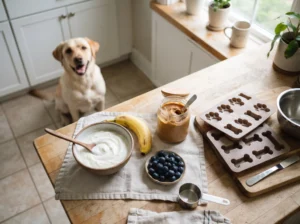
Basic Frozen Yogurt Dog Treats Recipe
This is the simplest version, ideal for beginners or dogs with sensitive stomachs.
Ingredients
- 2 cups plain Greek yogurt (unsweetened, xylitol-free)
- 1 ripe banana, mashed
- 1 tablespoon honey or peanut butter (optional, for extra flavor — ensure peanut butter is xylitol-free)
Instructions
Step 1: Mix the base. In a mixing bowl, combine the yogurt, mashed banana, and honey or peanut butter (if using) until smooth and well blended.
Step 2: Choose your mold. Pour the mixture into a silicone ice cube tray, small paper cups, or a silicone mold shaped like paw prints or bones for a fun presentation.
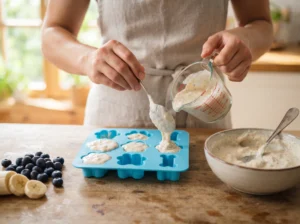
Step 3: Freeze. Place the filled tray or molds in the freezer for at least 4 hours, or until fully solid. For best texture, freeze overnight.
Step 4: Pop and serve. Once frozen, pop the treats out of the mold and serve immediately, or store them for later.
Fun Variations to Try
Once you’ve mastered the basic recipe, mix things up with these dog-safe variations:
Peanut Butter Swirl: Layer plain yogurt with a thin swirl of xylitol-free peanut butter before freezing for added flavor and visual appeal.
Berry Blast: Add a handful of blueberries or diced strawberries to the yogurt mixture. Both fruits are safe for dogs in moderation and add natural sweetness plus antioxidants.
Pumpkin Spice (No Spice!): Mix in a few tablespoons of plain canned pumpkin (not pie filling) for a fiber boost that’s gentle on digestion. Skip actual spices like nutmeg, which can be harmful to dogs.
Watermelon Yogurt Pops: Blend seedless watermelon chunks into the yogurt base for an extra-hydrating summer treat.
Frozen Yogurt Bark: Spread the yogurt mixture in a thin layer on a parchment-lined tray, sprinkle with dog-safe toppings like small pieces of banana or blueberries, freeze, then break into pieces like bark.
How to Serve Frozen Yogurt Treats Safely
- Serve in moderation. Even healthy treats should stay within 10% of your dog’s daily caloric intake.
- Watch for brain freeze behavior. Some dogs will gulp cold treats too fast. Supervise, especially with larger frozen pieces.
- Introduce slowly. If your dog hasn’t had yogurt before, offer a small amount first to check for any digestive sensitivity.
- Size treats appropriately. Use smaller molds for small dogs and puppies to avoid choking hazards.
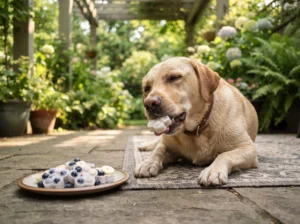
Storage Tips
- Store treats in an airtight, freezer-safe container or bag once fully frozen.
- They’ll keep well in the freezer for up to 2 months.
- Avoid refreezing treats once they’ve thawed, as texture and safety can be compromised.
Ingredients and Foods to Avoid
When making any frozen treat for your dog, steer clear of:
- Xylitol (found in some sugar-free yogurts and peanut butters)
- Chocolate or cocoa powder
- Grapes or raisins
- Added sugars or artificial sweeteners
- Nutmeg and other strong spices
Frequently Asked Questions
Can all dogs eat yogurt?
Most dogs tolerate plain yogurt well, but dogs with dairy sensitivities or lactose intolerance may experience mild stomach upset. Start with a small amount to test tolerance.
How long do these treats take to freeze?
Typically 4 hours for small molds, though overnight freezing gives the best firm texture.
Can I use flavored yogurt?
It’s best to avoid flavored yogurts, as they often contain added sugars or artificial sweeteners that aren’t ideal — or safe — for dogs.
Are these treats safe for puppies?
Generally yes, in small portions, but check with your veterinarian first, especially for very young puppies.
Final Thoughts
Frozen yogurt dog treats are proof that keeping your dog cool and happy in the summer doesn’t require store-bought products loaded with unnecessary additives. With a tub of plain yogurt and a few safe mix-ins, you can create a refreshing, probiotic-rich snack that doubles as a fun way to beat the heat. Try the basic recipe first, then experiment with flavors your dog loves — your pup will be lining up at the freezer door all summer long.