


Dachshunds are known for their long bodies, short legs, and big personalities. They are also known for being very good at begging. Those soulful eyes can turn a “just one more” treat into a daily habit, and extra weight is a bigger problem for this breed than for most.
This guide explains why weight matters so much for dachshunds, how to choose smarter treats, and how to bake a simple low-calorie batch at home.
Why Weight Matters More for Dachshunds
A dachshund’s long spine and short legs are part of what makes the breed so charming, but they also put the back under extra stress. Dachshunds are among the breeds most prone to intervertebral disc disease (IVDD), a painful condition that affects the discs cushioning the spine. Carrying extra weight adds strain to that spine and to the joints, so keeping your dog lean is one of the most practical ways to protect their mobility.
Because dachshunds are small, a few extra treats make a bigger difference than they would for a large breed. A single biscuit that is a snack for a Labrador can be a real chunk of a dachshund’s daily calories.
How Many Treats Is Too Many?
A common rule of thumb is that treats should make up no more than 10% of your dog’s daily calories. A typical adult miniature dachshund may need only around 300 calories a day, and a standard dachshund somewhat more. That leaves a small treat budget, often 30 to 50 calories a day, to share across all training rewards, dental chews, and snacks.
Your vet can give you a precise daily calorie target based on your dog’s age, weight, and activity level. Ask for it at your next checkup, because it makes every treat decision easier.
What to Look for in a Dachshund-Friendly Treat
When choosing or making treats, aim for these qualities:
- Low calorie per piece. Look for treats under 10 calories each, or break larger ones into pieces.
- Small size. Tiny treats let you reward your dog more often without overdoing it.
- Simple ingredients. Short ingredient lists are easier to check for sugar, fat, and fillers.
- High fiber or water content. Vegetables and fruits help dogs feel satisfied for fewer calories.
- No added sugar, salt, or artificial colors.
If you want a bigger selection of options, browse our guide to low-calorie dog treats for overweight dogs.
Healthy Swaps You Can Try Today
You don’t always need a recipe. Several everyday foods make good low-calorie treats for most dogs when served in small portions:
- Carrot slices or sticks, either raw or lightly steamed
- Green beans, plain and cooked or raw
- Cucumber slices
- Apple slices, with the core and seeds removed
- Blueberries, a few at a time
- Plain cooked pumpkin, a teaspoon or two

Introduce any new food slowly and in small amounts. Avoid grapes, raisins, onions, garlic, chocolate, macadamia nuts, and anything containing xylitol, all of which are dangerous for dogs.
Easy Low-Calorie Dachshund Treat Recipe
This recipe makes about 40 tiny treats, so you can reward your dog often without going over the calorie budget.
Ingredients
- 1 cup oat flour (blend rolled oats into a fine powder if needed)
- ½ cup plain canned pumpkin (not pie filling)
- ¼ cup finely grated carrot
- 1 egg
- 1 tablespoon ground flaxseed (optional)
- 1 to 2 tablespoons water, as needed
Instructions
Step 1: Preheat. Heat your oven to 350°F (175°C) and line a baking sheet with parchment paper.
Step 2: Mix the wet ingredients. In a bowl, stir together the pumpkin, grated carrot, and egg until smooth.
Step 3: Add the dry ingredients. Mix in the oat flour and ground flaxseed. The dough should be thick and slightly sticky. Add water a teaspoon at a time if it is too dry, or a little more oat flour if it is too wet.
Step 4: Shape small. Roll the dough about ¼ inch thick and cut it into pea-sized or thumbnail-sized pieces. You can also pinch off tiny bits and flatten them. Keep them small, because size is what keeps the calories low.

Step 5: Bake. Bake for 15 to 20 minutes, until the treats are firm and dry to the touch.
Step 6: Cool. Let them cool completely on a wire rack. For a crunchier texture, turn off the oven and leave them inside for another 30 minutes.
If your dog loves the carrot flavor, you can find more ideas in our carrot dog treat recipe.
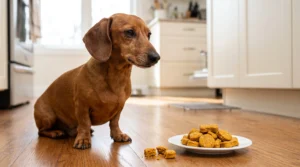
Storage Tips
Homemade treats have no preservatives, so store them with care:
- Room temperature: up to 5 days in an airtight container
- Refrigerator: up to 2 weeks
- Freezer: up to 3 months in a sealed bag
Discard anything that smells off or shows signs of mold.
Smart Treat Habits for Dachshund Owners
What you give matters, and so does how you give it.
- Measure the day’s treats in the morning. Put them in a small container and stop when it’s empty.
- Break treats in half. Most dogs care more about getting something than about the size.
- Use part of mealtime kibble as rewards. Training treats don’t have to be extra food.
- Reward with play and praise. A short game, a belly rub, or a walk can be just as motivating.
- Get the whole family on the same page. Extra treats from different people add up fast.
- Weigh your dog regularly. Small changes show up on the scale before they show up on the body.
Sizing treats for a small frame matters, so our roundup of the best dog treats for small breeds is also worth a look.
Signs Your Dachshund May Be Overweight
You should be able to feel your dog’s ribs easily under a thin layer of fat, and you should see a slight waist when looking from above. If you can’t feel the ribs, the belly hangs low, or your dog tires quickly on walks, they may be carrying extra weight. Your vet can confirm this and help you build a safe plan for gradual weight loss.
Frequently Asked Questions
Are store-bought treats bad for dachshunds?
Not necessarily. Many are fine in small amounts, but always check the label for calories per treat and avoid those high in sugar, salt, or fat.
Can dachshunds eat peanut butter?
Plain, xylitol-free peanut butter is safe in small amounts, but it is high in calories. A lick or a small dab is plenty.
How often can I give my dachshund treats?
There’s no fixed number. What matters is that all treats together stay within about 10% of daily calories.
Are vegetables really enough of a reward?
Many dogs enjoy crunchy vegetables as much as biscuits, though some take a little time to warm up to them. Offer them when your dog is hungry, such as before meals.
Final Thoughts
Dachshunds don’t have to give up treats to stay healthy. Small portions, low-calorie ingredients, and a few simple habits go a long way toward protecting their backs and joints. Check with your vet about your dog’s calorie needs, and enjoy rewarding your long little friend in a smarter way.