

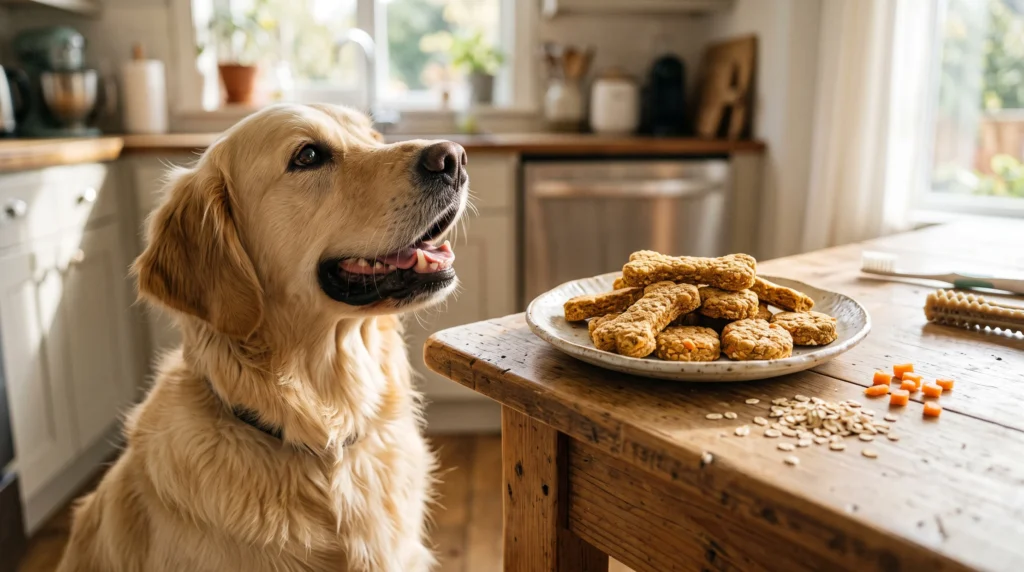
Most dog owners don’t think about their dog’s teeth until bad breath becomes impossible to ignore. By age three, a large share of dogs already show some sign of dental disease, according to veterinary dental organizations. Daily brushing and regular vet cleanings are the gold standard of care, but what your dog chews can also make a difference. Crunchy biscuits are one of the easiest ways to add a little extra dental support to your dog’s routine.
This guide explains how crunchy biscuits help, where their limits are, and how to choose or bake the right ones.
How Crunchy Biscuits Support Dental Health
When a dog bites into a firm, crunchy biscuit, the surface of the tooth meets resistance. That friction can help scrape away soft plaque before it hardens into tartar. Soft, chewy treats tend to stick to the teeth and break apart easily, so they offer little of this cleaning effect.
Here is what crunchy biscuits can do:
- Mechanical cleaning: The abrasive texture rubs against tooth surfaces as your dog chews.
- Extra chewing time: A firm biscuit takes longer to eat, which means more contact with the teeth.
- Saliva production: Chewing increases saliva flow, which helps rinse food particles from the mouth.
- Mental satisfaction: Chewing is a natural, calming behavior for dogs.
Plaque, Tartar, and Why They Matter
Plaque is a sticky film of bacteria that forms on teeth within hours of eating. If it isn’t removed, minerals in saliva harden it into tartar within a few days. Tartar can’t be brushed away at home and must be removed by a veterinarian.
Left alone, tartar leads to gum inflammation (gingivitis), and eventually periodontal disease. This can cause pain, loose teeth, and infection, and bacteria from the mouth can travel into the bloodstream and affect other organs. Reducing plaque early is the best way to avoid these problems.
The Honest Limits of Crunchy Biscuits
It helps to be realistic. A crunchy biscuit is a helpful addition, but it is not a replacement for brushing. Most ordinary biscuits shatter quickly, so they clean only part of the tooth surface, and they mostly reach the teeth at the front of the mouth.
If you want a product with proven dental benefits, look for the Veterinary Oral Health Council (VOHC) seal. Products with this seal have been tested for plaque or tartar reduction. Homemade biscuits are not tested this way, so think of them as a supportive snack rather than a treatment.
For the best results, combine several habits:
- Brush your dog’s teeth several times a week, ideally daily, with dog-safe toothpaste
- Offer crunchy biscuits or VOHC-approved dental chews
- Schedule regular dental checkups with your vet
- Watch for warning signs such as bad breath, red gums, drooling, or reluctance to chew
What Makes a Good Crunchy Biscuit?
Not every biscuit is equal. The best ones for teeth are:
- Firm but not rock-hard. A biscuit should be sturdy enough to need real chewing, but it should never be so hard that you couldn’t press a fingernail into it. Very hard items can cause fractured teeth.
- Low in sugar. Sugary treats feed the bacteria that cause plaque.
- Made with simple ingredients. Whole grains, vegetables, and lean proteins are better choices than artificial flavors and fillers.
- The right size. A biscuit that is too small gets swallowed whole, which skips the chewing benefit.
If you’d like to make your own, our recipe for homemade crunchy dog biscuits shows you how to get the texture just right.
Simple Tips for Making Biscuits Extra Crunchy at Home
You don’t need special equipment to bake a crisp biscuit. A few small changes make a big difference:
- Roll the dough thin. About ¼ inch gives a crunchy result, while thicker biscuits stay soft inside.
- Use whole wheat or oat flour. These add texture and fiber. If your dog has grain sensitivities, check with your vet first.
- Bake low and slow. A lower temperature for a longer time dries the biscuit out evenly.
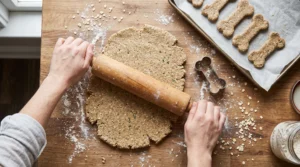
- Turn the oven off and leave them inside. Letting biscuits cool in the oven for an hour removes the last bit of moisture.
- Cool completely on a wire rack. Biscuits crisp up as they cool.
For a very simple starting point, try our homemade dog biscuits with 3 ingredients.
Add Crunchy, Teeth-Friendly Ingredients
Some ingredients bring natural crunch and nutrition to a biscuit:
- Carrots: Raw or finely grated carrots add texture and are low in calories. Many dogs love them as a standalone snack too.
- Apples: Remove the seeds and core. Apples add mild sweetness, fiber, and a pleasant crunch.
- Parsley: A small amount may help freshen breath, though evidence is limited.
- Ground oats: These add fiber and help biscuits hold their shape.
Avoid adding sugar, honey, or xylitol, which is toxic to dogs. Our carrot dog treat recipe is a great example of how a single vegetable can add both crunch and flavor.

How Many Biscuits Should Your Dog Have?
Treats of any kind should make up no more than about 10% of your dog’s daily calories. For a small dog, that may mean just one or two biscuits per day. Larger dogs can have a bit more, but moderation still matters. Extra treats lead to weight gain, which brings its own health risks, including joint problems and diabetes.
If your dog has a medical condition such as pancreatitis, kidney disease, or diabetes, talk to your vet before introducing new treats.
Storage Tips
Because crunchy biscuits are baked dry, they last longer than soft treats:
- Room temperature: 1 to 2 weeks in an airtight container
- Refrigerator: Up to 1 month
- Freezer: Up to 3 months
If a biscuit softens, smells off, or shows any mold, throw it away.
Frequently Asked Questions
Do crunchy biscuits really clean a dog’s teeth?
They can help reduce plaque through light abrasion, but the effect is modest. Brushing and professional cleanings remain the most effective care.
Are hard biscuits bad for dog teeth?
Extremely hard items can chip or fracture teeth. A good biscuit is crunchy but should break with moderate pressure.
Can puppies have crunchy biscuits?
Puppies can have small, appropriately sized biscuits, but their teeth are still developing. Ask your vet about the best textures for your puppy’s age.
How do I know if my dog has dental disease?
Persistent bad breath, yellow or brown buildup on the teeth, red or bleeding gums, and dropping food while eating are common signs. See your vet if you notice any of them.
Final Thoughts
Crunchy dog biscuits are a simple, enjoyable way to support your dog’s oral health. They won’t replace brushing or professional care, but when they are part of a consistent routine, they can help keep plaque in check and give your dog a satisfying chew. Choose firm, low-sugar biscuits, keep portions sensible, and check in with your vet regularly to keep that smile healthy.