

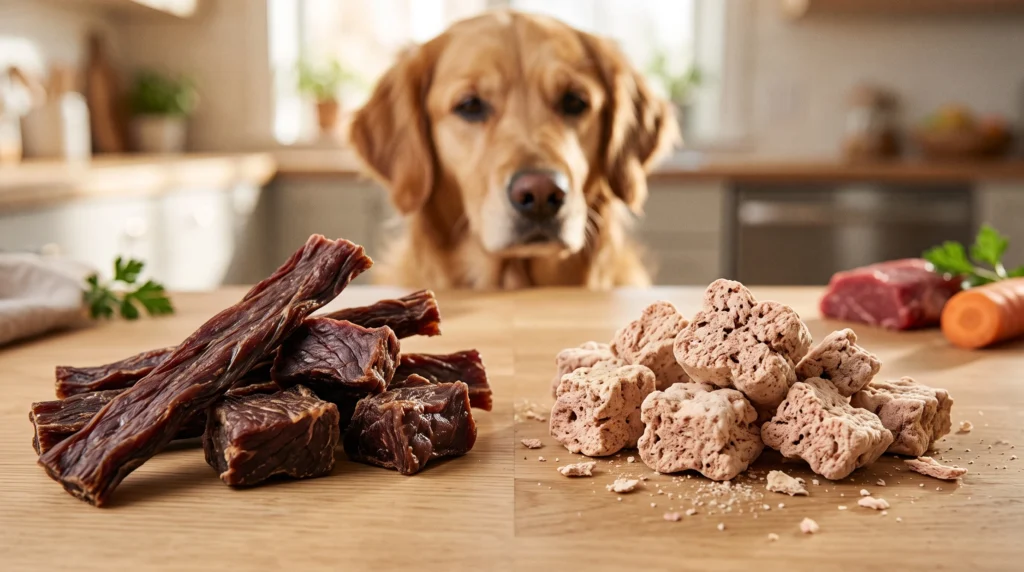
Walk down any pet store aisle and you’ll see bags labeled “air-dried,” “freeze-dried,” “dehydrated,” and “raw.” The packaging makes them all sound premium, so it’s hard to tell what you’re paying for. The two terms aren’t interchangeable. Each describes a different way of removing moisture, and that changes the texture, cost, shelf life, and safety considerations. This guide explains how each method works and which treat suits your dog.
Why Remove Moisture at All?
Bacteria and mold need water to grow. Taking moisture out of meat, fruit, or vegetables makes the treat last much longer without relying on heavy chemical preservatives. Air-drying and freeze-drying both do this, but they get there by very different routes.
What Are Air-Dried Dog Treats?
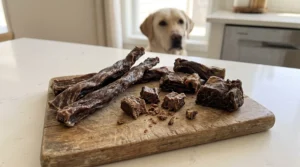
Air-drying removes moisture slowly using gentle, circulating warm air. The ingredients are usually formed into strips, bites, or chunks and dried over many hours, sometimes longer. The temperature is warmer than a refrigerator but lower than conventional baking.
What they’re like:
- Texture: chewy, leathery, or jerky-like
- Appearance: darker and denser than the fresh ingredient
- Moisture: some remains, which is why the treat stays pliable
- Smell: often strong and savory, which many dogs love
Because air-dried treats are chewy, they work well for dogs who like to take their time. They also break into smaller pieces more easily than very hard treats.
What Are Freeze-Dried Dog Treats?
Freeze-drying is more technical. The food is frozen solid, then placed in a vacuum chamber where the ice turns directly into vapor without melting. This process is called sublimation. It removes almost all the moisture while keeping the food’s original shape.
What they’re like:
- Texture: light, crumbly, and crunchy
- Appearance: close to the original shape, only paler
- Moisture: extremely low
- Weight: very light for their size
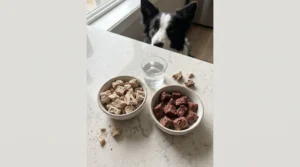
Freeze-dried treats can be rehydrated with a little water, which makes them useful for dogs with dental issues or picky appetites. Many owners also use them as high-value training rewards because dogs find them very appealing.
Key Differences at a Glance
| Feature | Air-Dried | Freeze-Dried |
|---|---|---|
| Process | Slow warm air | Freezing plus vacuum |
| Texture | Chewy, dense | Crunchy, airy |
| Moisture left | Low to moderate | Very low |
| Typical price | Moderate | Higher |
| Rehydration | Not needed | Optional |
| Best for | Chewing, daily treats | Training, picky eaters |
Nutrition: Which Keeps More?
Freeze-drying is often described as better at preserving nutrients, because it avoids high heat and keeps the food’s structure intact. Air-drying uses mild heat for a longer time, which may reduce some heat-sensitive vitamins.
In practice, the difference matters less than the overall quality of the ingredients. A treat made from real meat, with a short ingredient list and no unnecessary fillers, will beat a poorly made freeze-dried product. Treats should only be a small part of the diet, so they are not the main source of your dog’s nutrition. Keep them to about 10% of daily calories.
Safety: What Owners Should Know
This is the part labels often skip. Freeze-drying does not reliably kill bacteria. It puts them in a dormant state, and they can become active again once the food is rehydrated or in the right conditions. This is a particular concern with raw freeze-dried products, which can carry bacteria such as Salmonella or Listeria. The FDA has advised that raw pet foods carry risks for pets and for the people who handle them.
Air-dried treats may go through a heating step that reduces some pathogens, though it varies by manufacturer. Check the label for how the product was made, and choose brands that publish their testing and safety practices.
Whichever you choose:
- Wash your hands and any bowls after handling
- Keep treats away from young children and people with weakened immune systems
- Store them sealed and dry
- Throw away anything that smells off or looks moldy
If your dog has a health condition or an immune issue, ask your veterinarian before introducing raw or minimally processed treats.
Shelf Life and Storage
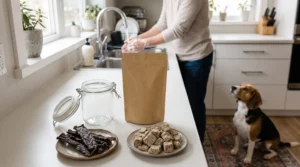
Freeze-dried treats are very low in moisture and can often last a year or more unopened, but once the bag is open they absorb humidity quickly and go stale. Reseal the bag tightly and use it within the window on the label.
Air-dried treats vary more, depending on how dry they are. Softer, chewier products may spoil faster once opened. If you’re curious about how drying affects freshness, our guide to dehydrated dog treats and shelf life breaks it down in detail.
Store all dried treats in a cool, dry place in an airtight container. Avoid leaving bags open in warm or humid rooms.
Cost: Is Freeze-Dried Worth It?
Freeze-drying needs expensive equipment and a lot of energy, so those treats cost more per ounce. Because they’re so light, a bag can look small for the price. That doesn’t make them a bad buy, but it’s worth thinking about how you’ll use them. For training sessions that need a lot of tiny rewards, a small amount goes a long way. For daily snacks, a cheaper air-dried treat may suit your budget better. If you’re weighing up the price tag, read our post on whether freeze-dried dog treats are worth it.
Can You Make Air-Dried Treats at Home?
Yes, and it’s the easier of the two to do at home. A home oven on its lowest setting or a countertop dehydrator can turn lean meat into homemade dog treats. Freeze-drying at home requires a specialized freeze dryer, which is a big investment.
If you want to try it, start with lean cuts, trim all visible fat, and make sure the meat is fully dried and cooled before storing. Cook meat to a safe temperature first, since drying alone doesn’t guarantee safety. Our walkthrough of homemade jerky dog treats shows the process step by step.
Which Should You Choose?
Choose air-dried if:
- Your dog enjoys chewing
- You want a daily treat at a moderate price
- You prefer a product that is already cooked or heat-processed
Choose freeze-dried if:
- You need a lightweight, high-value training reward
- Your dog is a picky eater and may accept a rehydrated version
- You’re comfortable following safe handling practices
Many owners keep both on hand. They suit different jobs, and rotating them keeps treat time interesting.
Frequently Asked Questions
Is freeze-dried healthier than air-dried?
Not necessarily. Freeze-drying may preserve more heat-sensitive nutrients, but ingredient quality and safe handling matter more than the method.
Are these treats the same as raw food?
Not always. Some freeze-dried treats are raw, while others are cooked first. Read the label carefully.
Can puppies eat them?
Often yes, in small, appropriately sized pieces. Hard or crunchy treats can be a choking risk, so supervise and ask your vet.
How do I know if a brand is trustworthy?
Look for a short ingredient list, a clear country of origin, and published safety testing.
Final Thoughts
Air-dried and freeze-dried treats both offer a tasty, long-lasting alternative to conventional biscuits, but they aren’t the same product. Air-dried treats are chewy and budget-friendly, while freeze-dried treats are crunchy, light, and better suited to training. Match the treat to your dog’s needs, handle it safely, and keep portions small.