

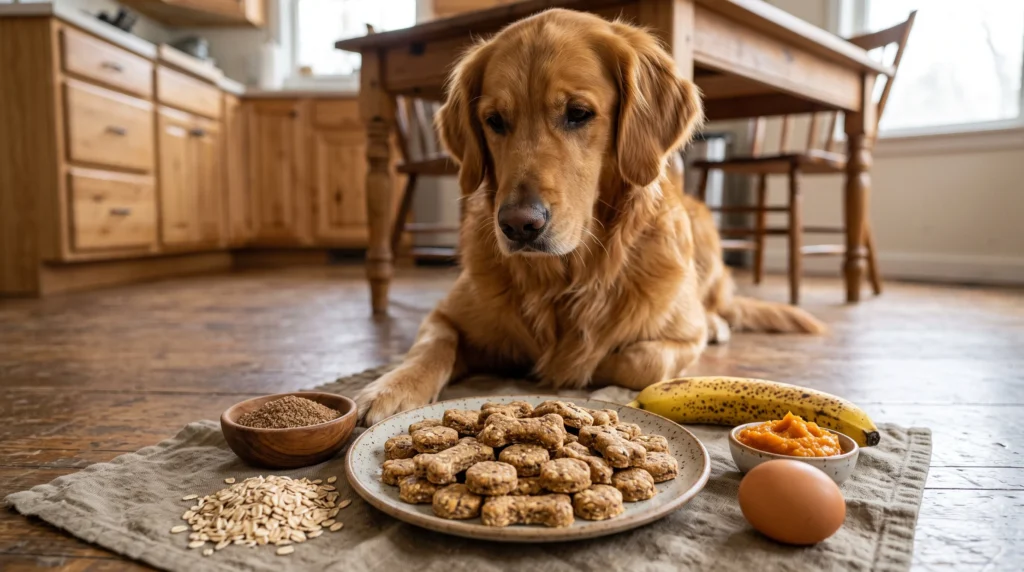
A shiny, soft coat is one of the first things people notice about a healthy dog. When the fur turns dull, dry, or flaky, many owners start looking at what their dog eats. Flaxseed is a popular, budget-friendly ingredient for this, and it works well in homemade treats. This guide covers why flaxseed helps coat health, what to expect, and how to bake a simple batch at home.
Why Flaxseed Is Good for a Dog’s Coat
Flaxseed is one of the richest plant sources of alpha-linolenic acid (ALA), an omega-3 fatty acid. Omega-3s help support the skin barrier, which keeps moisture in and irritants out. A well-hydrated skin barrier usually means less flaking and a smoother, shinier coat.
Flaxseed also provides:
- Lignans, plant compounds with antioxidant properties
- Fiber, which supports regular digestion
- Small amounts of protein, magnesium, and B vitamins
If you want more ideas built around skin and coat nutrition, our collection of omega-3 dog treats for coat and skin is a good next stop.
How Fast Will You See Results?
“Fast” is relative. No ingredient transforms a coat overnight. Most dogs need about four to eight weeks of consistent feeding before the coat looks noticeably different, because hair and skin cells renew slowly.
It also helps to know that dogs convert plant-based ALA into the more active omega-3s (EPA and DHA) only in limited amounts. Flaxseed is a helpful supporting ingredient, but it isn’t a cure-all. If your dog has intense itching, hair loss, or red, irritated skin, see your vet. Those symptoms can point to allergies, parasites, or a medical condition that treats can’t fix.
Ground vs. Whole Flaxseed
This detail matters. Always use ground (milled) flaxseed. Whole flaxseeds are tough, and they often pass through a dog’s digestive system without being broken down, so your dog gets none of the nutrition. Ground flaxseed also absorbs well into dough.
Store ground flaxseed in the fridge or freezer. Its natural oils go rancid faster than whole seeds.
Ingredients
This recipe makes about 25 small treats.
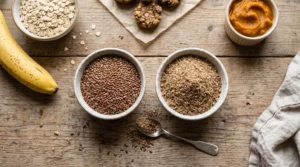
- 1½ cups oat flour (blend rolled oats into a fine powder if needed)
- 3 tablespoons ground flaxseed
- 1 ripe banana, mashed
- ¼ cup plain canned pumpkin (not pie filling)
- 1 egg
- 2 to 4 tablespoons water, as needed
Optional: ½ teaspoon cinnamon for flavor.
Step-by-Step Instructions
Step 1: Preheat the Oven
Heat your oven to 350°F (175°C) and line a baking sheet with parchment paper.
Step 2: Mix the Wet Ingredients
In a large bowl, mash the banana until smooth. Stir in the pumpkin and egg until well combined.
Step 3: Add the Dry Ingredients
Add the oat flour and ground flaxseed. Stir until a thick dough forms. If it’s crumbly, add water one tablespoon at a time. If it’s sticky, sprinkle in a little extra oat flour.
Step 4: Shape the Treats
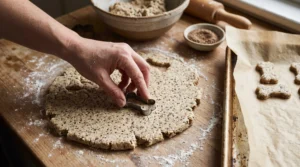
Roll the dough to about ¼ inch thick on a lightly floured surface. Cut it into small shapes with a cookie cutter, or roll it into small balls and flatten them. Smaller treats are easier to portion.
Step 5: Bake
Bake for 18 to 22 minutes, until the edges are golden and the treats feel firm.
Step 6: Cool Completely
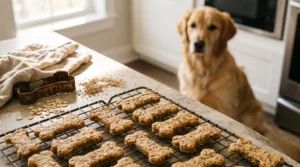
Let the treats cool on a wire rack for at least 30 minutes. They will crisp up as they cool.
If your dog loves the banana-and-oat combination, you’ll also enjoy these banana oat dog treats.
How Many Flaxseed Treats Can a Dog Have?
Flaxseed is healthy, but moderation matters. As a general guideline, a small dog can have about ¼ teaspoon of ground flaxseed per day, a medium dog about ½ teaspoon, and a large dog up to 1 teaspoon. In this recipe, the flaxseed is spread across about 25 treats, so one or two treats a day is plenty for most dogs.
Treats in general should stay under 10% of your dog’s daily calories. Too much flaxseed can cause loose stools or gas, so start with half a treat and watch how your dog responds. Always check with your veterinarian before adding supplements or new foods, especially if your dog has pancreatitis, a thyroid condition, or is pregnant.
Storage Tips
- Room temperature: up to 5 days in an airtight container
- Refrigerator: up to 2 weeks
- Freezer: up to 3 months in a sealed bag
These treats contain no preservatives, so discard any that smell off or show signs of mold.
Tips for Better Coat Health
Treats are only one part of the picture. For the best results, combine them with:
- A balanced, high-quality diet with enough protein and healthy fats
- Regular brushing, which spreads natural skin oils through the coat
- Fresh water at all times, since hydration affects skin health
- Appropriate bathing, because over-bathing strips natural oils
- Routine vet checkups to rule out underlying skin problems
If your dog has a sensitive stomach or food allergies, check our hypoallergenic dog treat recipes for gentler ingredient options.
Frequently Asked Questions
Can puppies eat flaxseed treats?
Small amounts are generally fine for puppies over a few months old, but ask your vet first, since puppies have more delicate digestion.
Is flaxseed oil better than ground flaxseed?
The oil is more concentrated but lacks fiber and goes rancid quickly. Ground flaxseed baked into treats is an easy, stable option.
Can I skip the egg?
Yes. Replace it with two extra tablespoons of pumpkin or applesauce.
Are flaxseed treats safe for dogs with allergies?
Flaxseed allergies are uncommon, but any new ingredient can cause a reaction. Introduce it slowly.
Final Thoughts
Ground flaxseed is a simple, affordable way to support your dog’s skin and coat from the inside. Pair it with a good diet and regular grooming, give it a few weeks, and you’re likely to see a softer, shinier coat. Keep portions small and check with your vet if you have health concerns.