

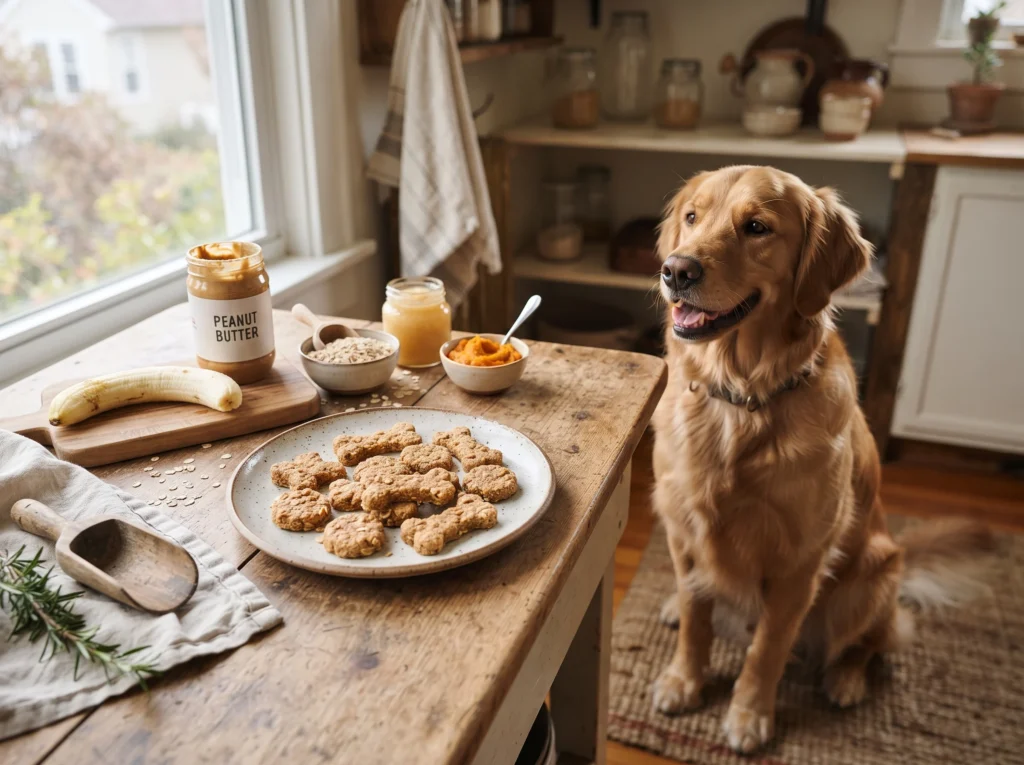
Discovering that your dog has an egg allergy can feel overwhelming, especially when so many dog treat recipes — homemade and store-bought alike — rely on eggs as a binding agent. The good news is that egg allergies in dogs are entirely manageable, and there are plenty of delicious, nutritious treat options that skip eggs altogether without sacrificing taste or texture.
This guide covers everything you need to know about egg-free dog treats: why some dogs react to eggs, what to use as substitutes, a full recipe you can try today, and tips for keeping your allergic dog safe and happy. If you’re just starting to explore homemade treats, our guide to homemade dog biscuits with 3 simple ingredients is a great place to begin.
Understanding Egg Allergies in Dogs
Food allergies in dogs happen when the immune system mistakenly identifies a protein as harmful and launches a defensive response. Eggs, while nutritious for most dogs, contain proteins in both the yolk and the white that can trigger this reaction in sensitive dogs.
Common symptoms of an egg allergy include:
- Itchy skin or excessive scratching
- Red, inflamed skin or hot spots
- Ear infections that keep recurring
- Digestive upset, including vomiting or diarrhea
- Chronic paw licking
If you notice these symptoms after your dog eats eggs or egg-containing treats, it’s worth discussing an elimination diet with your veterinarian to confirm the allergy. For a broader look at how food sensitivities present in dogs, check out our article on common dog food allergies and how to spot them.
It’s worth noting that true egg allergies are less common than sensitivities to proteins like beef, dairy, or chicken, but for dogs who do react, even small amounts of egg — including egg powder in commercial treats — can cause a flare-up.
Why Eggs Are Used in Dog Treats
Before diving into substitutes, it helps to understand what eggs actually do in a recipe:
- Binding – Eggs hold dry ingredients together.
- Moisture – They add richness and prevent treats from becoming too crumbly.
- Protein boost – Eggs contribute extra protein for muscle health.
Knowing this helps explain why you can’t simply remove eggs from a recipe without replacing their function — you need an ingredient that performs the same job.
The Best Egg Substitutes for Dog Treats
Here are the most reliable, dog-safe alternatives to eggs in homemade treats:
- Mashed banana – A natural binder that also adds sweetness dogs love.
- Unsweetened applesauce – Adds moisture and mild binding power without added sugar.
- Pumpkin puree – Both a binder and a digestive aid, thanks to its fiber content.
- Peanut butter (xylitol-free) – Adds richness and acts as a natural glue for dry ingredients.
- Plain pumpkin seed butter – A great nut-free alternative to peanut butter.
- Mashed sweet potato – Adds binding power along with beta-carotene and fiber.
Each of these substitutes works slightly differently depending on the recipe, so it may take a little experimentation to find your dog’s favorite texture.

Egg-Free Oatmeal Peanut Butter Dog Treats Recipe
Here’s a simple, allergy-friendly recipe that avoids eggs entirely while staying nutritious and tasty.
Ingredients
- 2 cups rolled oats
- 1/2 cup natural peanut butter (xylitol-free)
- 1 ripe banana, mashed
- 1/4 cup unsweetened applesauce
- 1/4 cup water (as needed)
Instructions
Step 1: Preheat the oven to 350°F (175°C) and line a baking sheet with parchment paper.
Step 2: Combine wet ingredients. In a large bowl, mix the mashed banana, peanut butter, and applesauce until smooth.
Step 3: Add the oats. Gradually stir in the rolled oats until a thick dough forms. Add water a tablespoon at a time if the mixture feels too dry.
Step 4: Shape the treats. Roll the dough into small balls and flatten with a fork, or roll it out and use a cookie cutter.

Step 5: Bake for 20–25 minutes, until the edges are golden brown.
Step 6: Cool completely on a wire rack before serving — this helps the treats firm up and develop a satisfying crunch.
For dogs who also need to avoid grains, you may want to adapt this recipe using the substitutions in our oatmeal dog treat recipe for sensitive stomachs, which covers gentle, allergy-conscious ingredient swaps in more detail.
Tips for Baking Egg-Free Treats Successfully
- Expect a slightly different texture. Egg-free treats are often a bit softer or denser than egg-based ones — this is normal and doesn’t affect safety or taste.
- Use overripe bananas. They mash more easily and add more natural sweetness, reducing the need for added sugar.
- Don’t overbake. Without eggs, treats can dry out faster, so check for doneness a few minutes before the recipe’s suggested time.
- Label leftovers clearly if you have multiple dogs at home with different dietary needs, to avoid mix-ups.

Reading Labels: Hidden Sources of Egg
If you buy any treats alongside your homemade ones, always check ingredient labels carefully. Eggs can appear in less obvious forms, such as:
- Egg powder
- Albumin
- Lysozyme
- Globulin
Manufacturers aren’t always required to highlight allergens the way human food labels do, so when in doubt, contact the brand directly or stick to treats you make yourself.
How to Introduce New Treats Safely
Even egg-free treats should be introduced gradually, especially if your dog has a known sensitivity to other ingredients. Start with a small piece, wait 24 hours, and watch for any signs of a reaction before making the treat a regular part of your dog’s routine. For more on building a treat routine around allergies, our guide on signs your dog has a food sensitivity is a helpful companion read.
Frequently Asked Questions
Can dogs be allergic to just egg whites or just egg yolks?
Yes, some dogs react to proteins found specifically in the egg white, while others are sensitive to the yolk. A vet-guided elimination diet can help pinpoint the exact trigger.
Are egg-free treats less nutritious?
Not necessarily. Ingredients like pumpkin, peanut butter, and oats provide fiber, healthy fats, and protein, making egg-free treats just as nutritious when balanced well.
Can I freeze egg-free dog treats?
Yes, egg-free treats freeze well for up to 3 months in a sealed container or freezer bag.
How long do homemade egg-free treats last?
Typically 5–7 days at room temperature, up to 2 weeks refrigerated, and up to 3 months frozen.
Final Thoughts
An egg allergy doesn’t mean your dog has to miss out on tasty, wholesome treats. With simple substitutes like banana, pumpkin, and peanut butter, you can create allergy-friendly biscuits that are just as satisfying as traditional recipes. Explore more allergy-conscious recipes and tips across DogTreatsLab to keep your sensitive pup happy, healthy, and treat-time ready.