

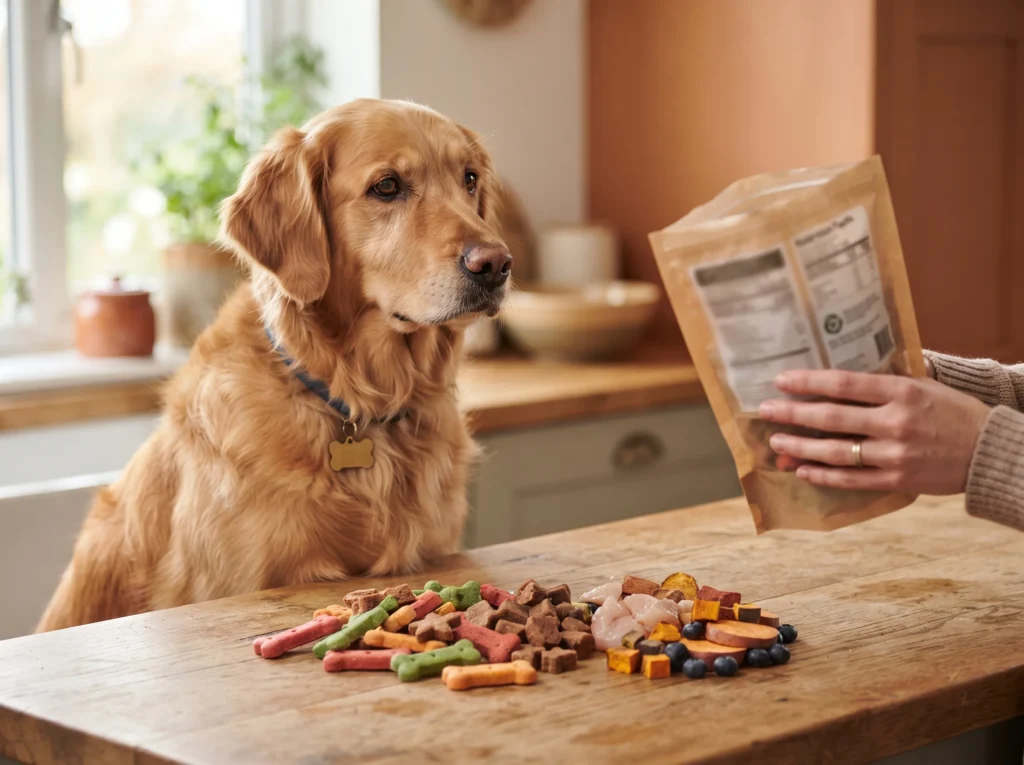
Walk down the pet food aisle and you’ll see bold labels like “natural,” “grain-free,” and “vet recommended” plastered across colorful packaging. But flip the bag over, and the ingredient list often tells a very different story. Many popular dog treats contain additives that offer no nutritional benefit and, in some cases, pose real health risks over time.
As a pet owner, it’s easy to assume that if a product is sold in stores, it must be safe. Unfortunately, that’s not always true. Pet food regulations are far less strict than those for human food, which means manufacturers can legally include ingredients that veterinarians and canine nutritionists actively warn against.
Here are five ingredients commonly found in dog treats that you should start avoiding — and what to look for instead.
1. Propylene Glycol
Propylene glycol is a synthetic additive used to keep treats soft and moist, and to prevent them from drying out on store shelves. You may recognize it as an ingredient in antifreeze — though the version used in pet food is a food-grade variant and not the same toxic formula used in automotive products.
Still, that doesn’t mean it’s harmless. Propylene glycol has been linked to health concerns in cats, which is why it’s banned from cat food in the United States. While it’s still technically permitted in dog treats, many veterinarians recommend avoiding it altogether, especially for dogs with sensitive stomachs or chronic health conditions.
What to look for instead: Treats that use natural moisture sources like pumpkin, sweet potato, or applesauce to stay soft.
2. BHA and BHT (Butylated Hydroxyanisole and Butylated Hydroxytoluene)
These two chemical preservatives are used to extend shelf life by preventing fats in treats from going rancid. They’re inexpensive and effective at their job, which is exactly why they show up so often in mass-produced dog treats.
The concern is that both BHA and BHT have been classified by some health organizations as possible carcinogens based on animal studies, and their long-term cumulative effects in pets haven’t been thoroughly studied. While occasional exposure in small amounts likely isn’t an immediate danger, feeding treats with these preservatives daily over a dog’s lifetime raises legitimate questions about long-term safety.
What to look for instead: Treats preserved naturally with mixed tocopherols (a form of vitamin E) or vitamin C, which serve the same shelf-stabilizing purpose without the same risk profile.
3. Artificial Food Dyes
Bright red, yellow, and blue treats might look appealing to us, but dogs don’t actually care what color their snacks are — their vision doesn’t even perceive color the way humans do. Artificial dyes like Red 40, Yellow 5, and Blue 2 are added purely for human appeal, not for any benefit to the dog.
Beyond being unnecessary, some dogs have shown sensitivities to artificial dyes, including mild allergic reactions, digestive upset, and hyperactivity in rare cases. Since these dyes serve zero nutritional or functional purpose, they’re one of the easiest ingredients to eliminate from your dog’s diet without losing anything of value.
What to look for instead: Treats that get their color naturally from ingredients like beet juice, turmeric, or spinach — or better yet, treats that don’t bother with color at all.
4. Corn Syrup and Added Sugars
Some treats, particularly soft and chewy varieties, contain corn syrup or other added sugars to boost palatability. While dogs are naturally drawn to sweet flavors, regularly feeding sugar-laden treats can contribute to obesity, dental problems, and blood sugar imbalances, especially in senior dogs or those already prone to diabetes.
Unlike humans, dogs have no nutritional need for added sugar in their diet. Any sweetness in a healthy treat should come from natural sources that also provide fiber and nutrients, rather than empty calories.
What to look for instead: Treats sweetened naturally with small amounts of fruit, like banana, apple, or blueberries.
5. Meat By-Products and Unnamed “Animal Digest”
This one often surprises pet owners the most. Many treats list vague ingredients like “meat by-products” or “animal digest” instead of naming a specific protein source. These terms can refer to a wide range of animal parts, not all of which are considered high-quality protein sources. “Animal digest” in particular is a chemically or enzymatically broken-down liquid typically sprayed onto treats to boost flavor and smell, and its source isn’t always disclosed.
The issue isn’t necessarily that these ingredients are dangerous, but rather that their quality and origin are inconsistent and largely untraceable. For pet owners trying to feed their dogs clean, identifiable ingredients, vague labeling like this makes it impossible to know exactly what you’re feeding your pet.
What to look for instead: Treats that name a specific, single protein source, such as “chicken breast,” “salmon,” or “beef liver,” rather than generic catch-all terms.
How to Read Dog Treat Labels Like a Pro
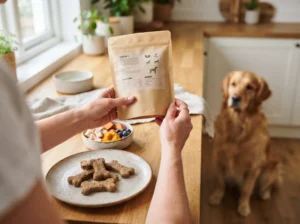
Next time you’re shopping for treats, keep these quick tips in mind:
- Check the first three ingredients. These make up the bulk of the product, so they matter most.
- Avoid long, unpronounceable chemical names. If you can’t recognize an ingredient, look it up before buying.
- Look for named protein sources. Specificity is a good sign of quality and transparency.
- Fewer ingredients are usually better. A short, simple ingredient list often signals a higher-quality product.
- “Natural” isn’t a guarantee. The term isn’t strictly regulated, so always check the actual ingredient list rather than relying on marketing language.

Final Thoughts
Not every treat on store shelves is harmful, but many contain unnecessary additives that offer no benefit to your dog’s health. By learning to spot ingredients like propylene glycol, BHA/BHT, artificial dyes, added sugars, and vague animal by-products, you can make smarter choices at the pet store — or decide to skip the store altogether and try making treats at home with ingredients you trust.
Your dog won’t know the difference between a $15 bag of boutique treats and a cleaner, simpler alternative. But over months and years, those ingredient choices can genuinely impact their long-term health and well-being.