


Grain-free treats have become increasingly popular among dog owners, especially for pups with food sensitivities, allergies, or digestive issues. Whether your dog has a diagnosed grain intolerance or you simply want to offer a wider variety of wholesome snacks, homemade grain-free treats give you full control over ingredients while keeping things simple and affordable.
Below are six vet-friendly, grain-free recipes using easy-to-find ingredients. Each one avoids wheat, corn, soy, and other common grains, relying instead on protein, vegetables, and natural binders that are gentle on your dog’s digestive system.
Why Choose Grain-Free Treats?
Before diving into the recipes, it helps to understand why grain-free options matter for some dogs:
- Digestive sensitivities: Some dogs have difficulty digesting grains, leading to bloating, gas, or loose stools.
- Allergies: While true grain allergies are less common than protein allergies, some dogs do react to wheat or corn specifically.
- Weight management: Grain-free treats made with vegetables and lean proteins tend to be lower in empty carbohydrates.
- Variety: Rotating treat types keeps mealtime interesting and can help identify any food sensitivities over time.
As always, if your dog has a diagnosed medical condition or allergy, consult your veterinarian before introducing new ingredients.
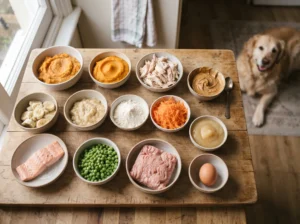
1. Pumpkin & Peanut Butter Bites
Pumpkin is a grain-free favorite because it’s gentle on digestion and rich in fiber.
Ingredients:
- 1 cup pumpkin puree (plain, not pie filling)
- 1/2 cup natural peanut butter (xylitol-free)
- 1 cup almond flour or coconut flour
Instructions:
Preheat oven to 350°F. Mix all ingredients into a thick dough. Roll into small balls, flatten slightly, and place on a parchment-lined baking sheet. Bake for 20–25 minutes until firm. Cool completely before serving.
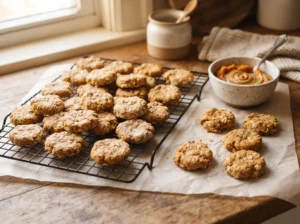
2. Chicken & Sweet Potato Chews
Packed with protein and beta-carotene, this recipe doubles as a nutritious snack and a satisfying chew.
Ingredients:
- 1 cup cooked, shredded chicken breast
- 1 medium sweet potato, cooked and mashed
- 1 egg
Instructions:
Combine all ingredients into a moldable dough. Shape into small rounds or use a mold. Bake at 325°F for 30–35 minutes, or until firm and slightly crisp on the edges. These make excellent training treats since they can be broken into smaller pieces.
3. Banana & Coconut Flour Cookies
A naturally sweet treat that’s easy on sensitive stomachs.
Ingredients:
- 2 ripe bananas, mashed
- 1 cup coconut flour
- 2 tablespoons coconut oil, melted
Instructions:
Mix ingredients until a dough forms. If too sticky, add small amounts of coconut flour until workable. Roll and cut into shapes, then bake at 350°F for 15–18 minutes until lightly golden.
4. Salmon & Sweet Pea Bites
Fish-based treats are excellent for dogs who thrive on omega-3 fatty acids for skin and coat health.
Ingredients:
- 1 can salmon (packed in water, drained and deboned)
- 1/2 cup cooked sweet peas
- 1 egg
Instructions:
Blend salmon and peas into a coarse paste, then mix in the egg to bind. Spoon small portions onto a baking sheet and flatten gently. Bake at 325°F for 20 minutes. Store in the refrigerator, as fish-based treats spoil faster than others.
5. Carrot & Applesauce Crunch
A crunchy, fiber-rich treat that’s great for dental health and easy digestion.
Ingredients:
- 1 cup shredded carrots
- 1/2 cup unsweetened applesauce
- 1 1/2 cups almond flour
Instructions:
Combine all ingredients into a firm dough. Roll thin (about 1/4 inch) and cut into shapes. Bake at 350°F for 25–30 minutes, flipping halfway, until crisp throughout. The extra crunch factor makes these satisfying for dogs who like to chew.
6. Turkey & Pumpkin Meatballs
A protein-packed, low-fat option that works well as a training reward or occasional meal topper.
Ingredients:
- 1 pound ground turkey
- 1/2 cup pumpkin puree
- 1 egg
Instructions:
Mix all ingredients thoroughly and roll into small, bite-sized balls. Place on a lined baking sheet and bake at 375°F for 20 minutes, or until fully cooked through (internal temperature of 165°F). Let cool before serving, and refrigerate leftovers within two hours.

Storage Guidelines for Homemade Treats
Since these recipes skip artificial preservatives, proper storage is important:
- Baked, dry treats (like the pumpkin peanut butter bites or carrot crunch): Store in an airtight container at room temperature for up to a week, or freeze for up to 3 months.
- Meat and fish-based treats: Refrigerate and use within 3–4 days, or freeze in portions for longer storage.
- Always label and date homemade treats so you know when to toss them.
General Tips for Grain-Free Baking
- Almond and coconut flour behave differently than wheat flour. They absorb more moisture, so recipes often need less liquid or more binding agents like egg.
- Avoid xylitol at all costs. This sugar substitute, found in some peanut butter and baked goods, is highly toxic to dogs.
- Introduce new treats gradually. Even grain-free ingredients can cause digestive upset if introduced too quickly, especially in dogs with sensitive stomachs.
- Portion control still matters. Grain-free doesn’t mean calorie-free — treats should still make up a small percentage of your dog’s daily diet.
Frequently Asked Questions
Is grain-free always better for dogs?
Not necessarily. Grain-free is beneficial for dogs with diagnosed sensitivities, but most dogs digest grains like oats and rice just fine. It’s worth discussing with your vet before making major dietary changes.
Can I substitute almond flour with another flour?
Yes, coconut flour, chickpea flour, or oat flour (if grain isn’t strictly required) can often be substituted, though ratios may need slight adjustments.
How long do homemade treats last compared to store-bought?
Homemade treats generally have a shorter shelf life since they lack preservatives — expect a week or two at most, depending on ingredients, versus months for commercial products.
Final Thoughts
Grain-free treats don’t have to be complicated or expensive to make. With simple, whole-food ingredients like pumpkin, sweet potato, chicken, and salmon, you can create treats that are both nutritious and delicious for your dog. Try rotating through these six recipes to keep things exciting, and always watch for how your dog responds to new ingredients — especially if they have known sensitivities.