

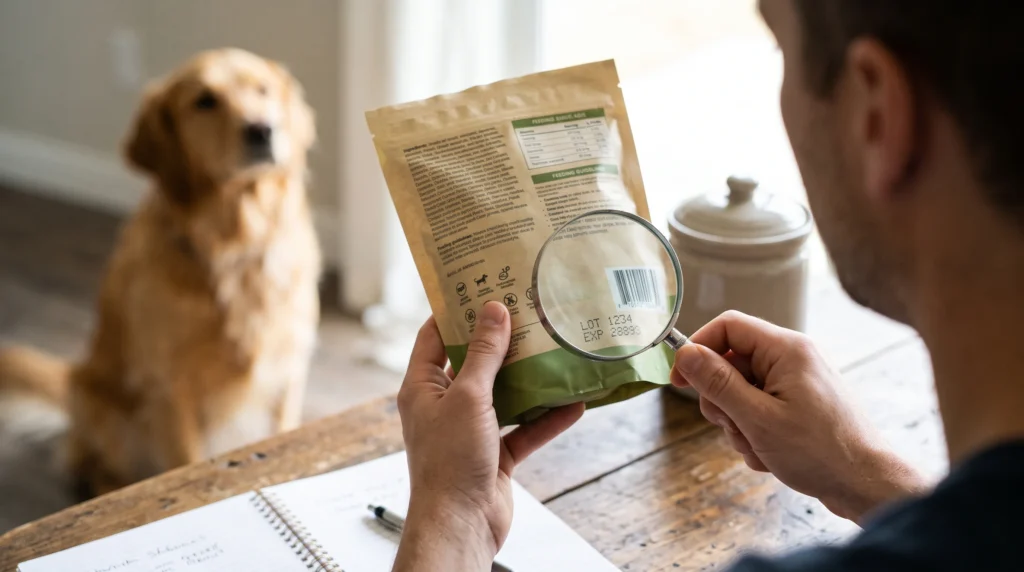
Most of us assume a bag of dog treats from the pet store is safe. Treat recalls happen more often than people think, and they usually come down to contamination. This guide covers three recent recalls announced through the FDA, what went wrong, and how to protect your dog. It also explains why checking lot numbers matters more than judging a brand by its name.
Why Dog Treat Recalls Happen
Most treat recalls involve salmonella, a bacteria that can sicken dogs and the people who handle the food. Other common causes include mold toxins, foreign material, and incorrect ingredient levels. Recalls are usually limited to certain batches, so one recall doesn’t mean everything a company makes is unsafe. A recall does tell you how well a company tests and controls its production, and that is worth knowing before you buy again.
1. Foodynamics Freeze-Dried Treats (Raw Dog Barkery and Related Brands)
Foodynamics voluntarily recalled specific lots of freeze-dried treats sold under the Raw Dog Barkery, BellePepper Cats, Kanu Pets, and What’s In the Bowl names over possible salmonella contamination. One affected item was a 16-ounce bag of freeze-dried whole chicken hearts. foxla
Why this one matters: Freeze-drying doesn’t kill bacteria. Many owners assume it does because the treats feel dry and shelf-stable, but raw freeze-dried products can still carry pathogens. The FDA notes that an infected pet may seem healthy and still pass the bacteria to other animals or people. foxla
What to do: Check the lot numbers in the official FDA notice. If you own a recalled lot, stop feeding it and wash your hands and any surfaces it touched. If you’re weighing raw products in general, read our guide on raw dog treat safety first.
2. Carolina Prime Pet Treats
Carolina Prime Pet recalled about 400 bags after routine third-party testing of a product found salmonella in a related lot of the same product that hadn’t been released yet. The affected treats were shipped to Hollywood Feed stores in several states, and the FDA said no illnesses had been reported at the time. greenmatters
Why this one matters: This is a case where testing worked, and it’s the better kind of recall story. The problem was found before widespread harm. Still, the treats reached stores in several states, so owners should always check recall notices, even for brands they trust.
What to do: The FDA advised people who bought the product to stop using it and contact the manufacturer for a refund. Don’t give leftovers to a friend’s dog or donate them. greenmatters
3. Elite Treats Chicken Chips for Dogs
In early 2026, Elite Treats, LLC recalled a single lot of its 6-ounce Chicken Chips for Dogs because of possible salmonella contamination, with product sold through feed stores in Alabama, Florida, Georgia, North Carolina, and South Carolina. No illnesses were reported. fox29
Why this one matters: This recall was small and regional, which shows that recalls aren’t limited to big national brands. Small companies and feed-store brands face the same risks, and sometimes have fewer resources for testing.
What to do: The FDA says to stop using the treats, not to sell or donate them, and to throw them away where children, pets, and wildlife can’t reach them. fox29
Should You Avoid These Brands Completely?
That’s your decision, but it helps to be realistic. A recall of one lot doesn’t prove a company is careless, and a company that recalls quickly and communicates clearly is often safer than one that stays silent. Here is what to look for:
- How fast the company acted after the problem was found
- Whether it published clear lot numbers and refund instructions
- How often recalls happen. A single recall is different from a repeating pattern
- Whether the company tests finished products and shares that information
If a brand has repeated recalls, refuses to cooperate with regulators, or won’t answer questions about testing, avoiding it is reasonable.
Signs Your Dog May Have a Contaminated Treat Reaction
Contact your vet if your dog shows any of these after eating a treat:
- Vomiting or diarrhea, especially if bloody
- Lethargy or unusual tiredness
- Fever
- Loss of appetite
- Abdominal pain or bloating
Healthy-looking dogs can also carry salmonella without symptoms, so people in the home should wash their hands after handling treats and food bowls, especially if children, elderly relatives, or anyone with a weakened immune system lives there.
How to Check If Your Dog’s Treats Are Recalled
- Find the lot number and best-by date on the bag, usually near the bottom or back.
- Search the FDA’s pet food recall page for your brand name.
- Sign up for recall alerts from the FDA or a trusted pet-safety source.
- Keep the original packaging until the bag is empty so you can verify lot numbers later.
- Check the ingredient list for items that don’t belong in dog treats. Our guide to dog treat ingredients to avoid shows what to look for.
A Safer Option: Make Treats at Home
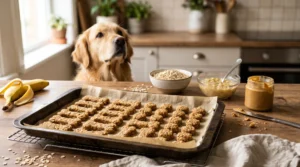
Homemade treats won’t eliminate every risk, but they give you control over ingredients, handling, and cooking temperature. Baked treats made with simple ingredients such as oats, banana, and peanut butter (always xylitol-free) are easy to prepare and store. If you want a place to start, try our easy homemade dog biscuits with 3 ingredients.
Store homemade treats in an airtight container, refrigerate or freeze any batch you can’t use within a week, and throw away anything that smells or looks off.
Frequently Asked Questions
Does “natural” on the label mean a treat is safe?
No. Natural describes ingredients, not safety testing, and natural products can still be contaminated.
Can salmonella from treats make humans sick?
Yes. People can get sick from handling contaminated treats and then touching their mouth. Wash your hands thoroughly after feeding.
Are freeze-dried raw treats riskier than baked treats?
Raw products generally carry a higher bacterial risk because they aren’t cooked. Baked or fully cooked treats tend to be lower risk.
Where can I find official recall information?
The FDA’s website lists current pet food and treat recalls, and recalled products are usually announced there first.
Final Thoughts
Recalls are frustrating, but they are also a sign the safety system is working. Check lot numbers, keep packaging, and stay alert for symptoms after your dog tries a new treat. When in doubt, choose products from companies that are open about testing, or bake your own at home.