

Walk down any pet store aisle and “grain-free” is printed on half the treat bags. It sounds healthier, but is it? Many owners assume grain-free is the better choice, then find their vet isn’t so sure. This guide covers what veterinarians actually say about grain-free treats, when they make sense, and how to pick a brand you can trust.
What Vets Really Think About Grain-Free
The honest answer is that most veterinarians don’t recommend grain-free products by default. Grains like oats, rice, and barley are digestible, nutritious ingredients for most dogs. True grain allergies are uncommon. Food allergies in dogs are more often triggered by proteins such as beef, chicken, or dairy than by grains.
Veterinarians at Auburn University’s College of Veterinary Medicine have noted that it is very rare for a dog to medically need a grain-free diet. The popularity of grain-free products grew largely from marketing and human diet trends, not from veterinary necessity.
There’s also a safety question. Since 2018, the FDA has investigated reports of dilated cardiomyopathy (DCM), a serious heart condition, in dogs eating certain grain-free diets, including some breeds that don’t normally develop it. In 2019 the agency listed brands named most often in those reports. The FDA has said it hasn’t determined the exact cause and hasn’t told owners to change diets on its own. It urged them to talk to their vets first.
This research focused mainly on complete dog foods, especially dry kibble, not treats. Treats are a small part of the diet, so the risk is far lower. Still, it’s a good reason to be thoughtful rather than assuming “grain-free” means “better.”

When Grain-Free Treats Make Sense
Grain-free treats can be a reasonable choice in a few situations:
- Your dog has a diagnosed grain allergy or sensitivity. Your vet may recommend an elimination trial to confirm it.
- Your dog is on a limited-ingredient diet. Short ingredient lists make it easier to avoid triggers.
- Your dog has digestive trouble with certain grains. Some dogs do better with alternatives like sweet potato or pumpkin.
- Your vet suggested it. If so, follow their guidance on which products to use.
If none of these apply, a treat with wholesome grains is usually just as good, and sometimes better.
How to Judge a Grain-Free Treat Brand
Since no brand is universally endorsed by vets, use the criteria veterinary professionals suggest for any pet product. Check these before you buy:
1. Short, recognizable ingredients. The best treats list a real food first, such as chicken, pumpkin, or sweet potato. Avoid long lists of fillers, artificial colors, and unnamed “meat by-products.”
2. A nutritional adequacy or AAFCO statement. Treats don’t need to be complete diets, but a reputable company explains how its products are made and what standards they follow.
3. Quality control and transparency. Look for brands that publish where they source ingredients and where they manufacture. Companies that employ veterinary nutritionists or share testing information are a good sign.
4. A clear recall history. Search the FDA’s recall database for any brand before you commit.
5. Reasonable calorie content. Grain-free doesn’t mean low-calorie. Many grain-free treats use starchy ingredients like potato or tapioca and can be just as calorie-dense as regular ones.
6. Sourcing and country of origin. Many owners prefer treats made in countries with strong food safety oversight. Check the label.
7. No unnecessary additives. Skip treats with artificial preservatives, sugar, or flavor enhancers.
For a closer look at which ingredients are worth seeking out, see our guide to the healthiest dog treat ingredients.
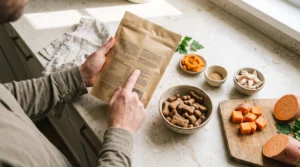
Red Flags to Avoid
- Marketing claims that treats “cure” allergies or prevent disease
- Vague wording like “vet-approved” with no named vet or credentials
- Peas, lentils, or legumes listed as the main ingredients in several forms (a pattern often discussed in the DCM research)
- Treats with xylitol or other ingredients known to be toxic to dogs
- Brands with no contact information or customer support
“Vet-approved” is not a regulated term. Anyone can print it on a package, so don’t treat it as proof of quality on its own.
Make Your Own: The Simplest Option
Making treats at home gives you complete control. You choose every ingredient, skip the additives, and avoid wondering what’s in the bag. If your dog needs a grain-free diet, homemade treats built on pumpkin, sweet potato, or eggs are easy to adapt. Our collection of grain-free dog treat recipes is a good place to start.
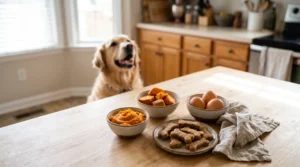
For Dogs with Sensitivities
If your dog scratches constantly or has a touchy stomach, grain-free may not be the answer. The real trigger could be a protein or another ingredient. Work with your vet on an elimination diet before changing treats. In the meantime, our hypoallergenic dog treat recipes use simple ingredients that are gentler on sensitive dogs.
Questions to Ask Your Vet
Bring these to your next appointment:
- Does my dog actually need a grain-free diet?
- Are there specific ingredients I should avoid for my dog’s breed or health history?
- How many treats per day fits my dog’s calorie needs?
- Can you suggest a few brands or ingredients you trust?
Your vet knows your dog’s health history, which makes their advice more reliable than any online list.
Frequently Asked Questions
Are grain-free treats safer than treats with grains?
Not necessarily. For most dogs, grains are a healthy part of the diet, and grain-free is not automatically safer.
Do grain-free treats cause heart problems?
The FDA investigated a possible link between grain-free diets and DCM, but the cause is still unknown. The concern relates mainly to complete diets fed daily, not occasional treats. Ask your vet if you’re worried.
How many treats can my dog have each day?
Keep treats under about 10% of daily calories.
Should I switch my dog’s treats right now?
Only if your vet advises it. Change treats gradually to avoid stomach upset.
Final Thoughts
There’s no magic list of grain-free treat brands that every veterinarian recommends. What vets do agree on is simple: read the label, choose quality ingredients, keep portions small, and match treats to your own dog’s needs. Use the checklist above, talk to your vet, and when in doubt, bake a batch at home.