

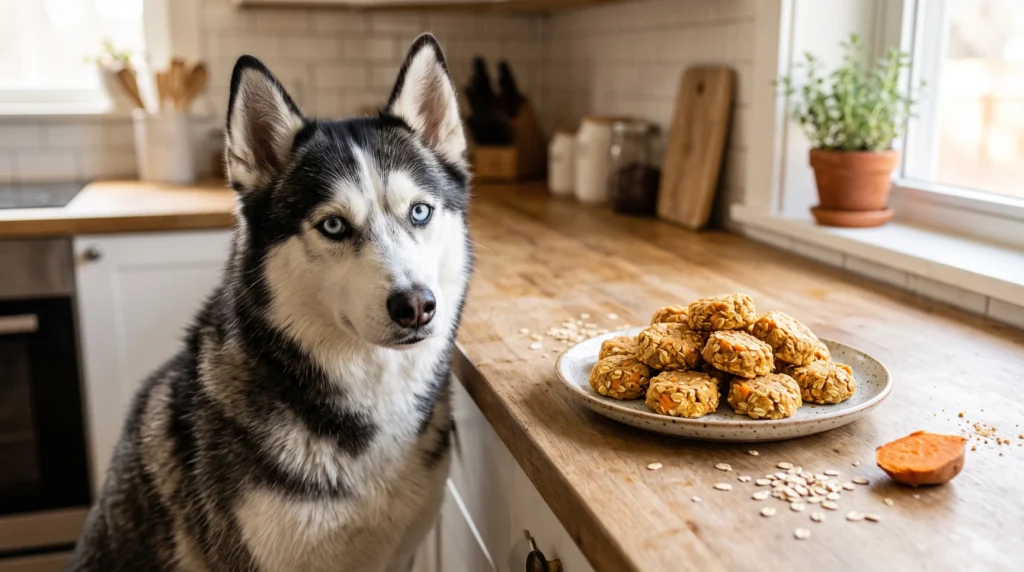
Anyone who lives with a Siberian Husky knows the routine: a long run, a game of fetch, and then your dog looks at you as if the day is just beginning. Huskies were bred to pull light loads over long distances in cold climates, and that endurance is still part of who they are. Their energy needs are real, and so are the risks of overfeeding. This guide covers what makes a good treat for a high-energy Husky, which ingredients to choose, and a simple homemade recipe.
Why Huskies Need Smart Treats
Huskies are medium-sized, athletic dogs with an efficient metabolism. Many do well on modest portions, which means treats can add up quickly. A treat that is too rich, too sugary, or too large can cause weight gain or an upset stomach, especially on days when your dog isn’t exercising much.
The goal is not simply to give more fuel. It is to give the right kind of fuel, in the right amount, at the right time. Good Husky treats should be:
- Nutrient-dense, so a small treat delivers real value
- Easy to digest, since many Huskies have sensitive stomachs
- Small enough for portion control, ideally bite-sized
- Free from artificial colors, fillers, and added sugar
Treats of any kind should stay under about 10% of your dog’s daily calories. The rest should come from a complete, balanced diet.
Ingredients That Support an Active Husky
Complex Carbohydrates
Sweet potato and oats release energy more slowly than refined flour or sugar. They also provide fiber, which supports healthy digestion. These work well for dogs that train, hike, or run regularly.
Lean Protein
Protein supports muscle repair after exercise. Eggs, plain cooked chicken, and turkey are good options for homemade treats.
Healthy Fats
Omega-3 fatty acids support skin and coat health, which matters for a breed with a thick double coat. Ground flaxseed is an affordable plant-based source. Since active dogs often need healthy fats, small amounts of these ingredients are useful, but keep portions modest. If coat care is a priority, our roundup of omega-3 dog treats for coat and skin has more ideas.
Natural Binders and Flavor
Plain canned pumpkin, unsweetened applesauce, and xylitol-free peanut butter add flavor and help hold dough together. Always read the peanut butter label, because xylitol is highly toxic to dogs.
Homemade Sweet Potato Energy Bites for Huskies
This recipe makes about 30 small treats. They are soft enough to chew easily and sturdy enough to carry in a pocket on a hike.
Ingredients
- 1 cup cooked, mashed sweet potato (cooled)
- 1½ cups oat flour (blend rolled oats into a fine powder if needed)
- 1 egg
- 2 tablespoons natural, xylitol-free peanut butter
- 1 tablespoon ground flaxseed
- 1 to 3 tablespoons water, if needed

Instructions
- Preheat your oven to 350°F (175°C) and line a baking sheet with parchment paper.
- Mix the wet ingredients. In a large bowl, combine the mashed sweet potato, egg, and peanut butter until smooth.
- Add the dry ingredients. Stir in the oat flour and ground flaxseed until a thick dough forms. If it is too dry, add water a tablespoon at a time. If it is too sticky, add a little more oat flour.
- Shape the treats. Roll the dough into small balls, about the size of a grape, and flatten them slightly. Small pieces are easier to portion and use as rewards.
- Bake for 18 to 22 minutes, until the edges are lightly golden and the treats feel firm.
- Cool completely on a wire rack before serving.

Using Treats During Training and Exercise
Huskies are intelligent but famously independent. They respond best to short, upbeat training sessions with rewards they actually want. Tiny, soft treats work well because your dog can swallow them quickly and stay focused. If you want more ideas for reward-based training, browse our guide to training treats for reward sessions.
A few practical tips:
- Use treats after exercise, not right before. Feeding a large amount before intense activity can upset digestion.
- Break treats into smaller pieces. A Husky does not need a full-size biscuit for a recall reward.
- Adjust meals on heavy treat days. If you train a lot, reduce your dog’s regular food slightly.
- Offer water. Active dogs lose fluids quickly, especially in warm weather.
Treats for Other High-Energy Breeds
If you live with more than one active dog, or you are comparing breeds, many of the same principles apply across athletic dogs. Our post on treats for energetic dogs like Border Collies covers similar ingredient choices and portion tips that also suit Huskies.
Storage Tips
- Room temperature: up to 5 days in an airtight container
- Refrigerator: up to 2 weeks
- Freezer: up to 3 months in a sealed bag
These treats contain no preservatives. Discard any that smell off or show signs of mold.
Foods to Avoid
Keep these out of any homemade treat for your dog:
- Xylitol (a sweetener found in some peanut butters and baked goods)
- Chocolate and cocoa
- Grapes and raisins
- Onions and garlic
- Macadamia nuts
- Excess salt, sugar, or fat
When in doubt, check with your vet. Dogs with health conditions, food allergies, or weight concerns may need a different approach.
Frequently Asked Questions
How many treats can a Husky have per day?
It depends on size, activity, and the rest of the diet. A general rule is that treats should make up no more than 10% of daily calories. For this recipe, most Huskies do well with a handful of small treats spread across the day.
Are oats safe for Huskies?
Plain, cooked oats are generally safe and easy to digest for most dogs. Introduce them gradually, and skip them if your dog has a grain sensitivity.
Can puppies eat these treats?
Most are fine in small amounts, but puppies have delicate digestion. Ask your vet before introducing new foods.
Can I replace the egg?
Yes. Use two extra tablespoons of pumpkin or applesauce as a binder.
Final Thoughts
A high-energy Husky needs more than a big bag of store-bought biscuits. Simple, wholesome ingredients like sweet potato, oats, and a little protein make treats that support an active lifestyle without overloading your dog. Keep portions small, match treats to your dog’s activity level, and check in with your vet whenever you make changes to your dog’s diet.